
In 2004 Rhonda Byrne was going through the worst year of her life when her daughter handed her an old book. It was The Science of Getting Rich, written by an Indiana man named Wallace D. Wattles in 1910. Byrne has said that reading it set her on the path to The Secret, the 2006 film and book that sold tens of millions of copies and made "the law of attraction" a household phrase.
What most of those readers never learned is that Wattles was not alone. He was one voice in a whole American movement, New Thought, that spent half a century writing about how thought shapes circumstance. Its books are short, cheap to print, and now all in the public domain. Here are the ones that matter, roughly in the order they were written.
Prentice Mulford: thoughts are things
Mulford was a California gold-rush miner and humorist who, in the 1880s, retired to a cabin in New Jersey and began writing essays with titles like "Thoughts Are Things." His idea was that every thought is a real force, drawing to you people and conditions of its own kind. Almost every later writer borrowed from him.

Your Forces and How to Use Them, Volume VI
Prentice Mulford · 1888
A volume of Mulford's "White Cross Library" essays, among the earliest New Thought writing.
William Walker Atkinson: the phrase itself
In 1906 Atkinson, a Chicago lawyer who had cured his own breakdown with mental healing, published Thought Vibration, or the Law of Attraction in the Thought World. Thoughts, he says, are vibrations, and like attracts like: worry draws more things to worry about, and confident desire draws its object.
William Walker Atkinson · 1908
The book that put "the law of attraction" on a cover. Practical, brisk, and very modern in tone.
Thomas Troward: the mind behind it all
Troward was a retired British judge in India who gave a series of lectures in Edinburgh in 1904. His argument is the most rigorous in the movement: there is one universal mind that is purely subjective, and it takes the shape of whatever ideas we impress upon it. Habitual thoughts of limitation become our limitations. Neville Goddard, Ernest Holmes and many others built on Troward.
The Edinburgh Lectures on Mental Science
Sixteen lectures, argued with a judge's logic. The intellectual backbone of New Thought.
Wallace D. Wattles: the book behind The Secret
There is a thinking stuff from which all things are made, and which, in its original state, permeates, penetrates, and fills the interspaces of the universe.
Wattles repeats that sentence again and again, almost like a chant. His method is a recipe: form a clear mental picture of what you want, hold it with faith and gratitude, impress it on the formless substance, and then act, every day, "in a Certain Way." Two things set him apart from his imitators. He insists on gratitude, and he insists on action: you are to create, not compete, and do every day all that can be done that day.
W. D. Wattles · 1910
The direct ancestor of The Secret. Short, plain-spoken, and still the most practical book on this list.

Wattles's companion book, applying the same method to health.
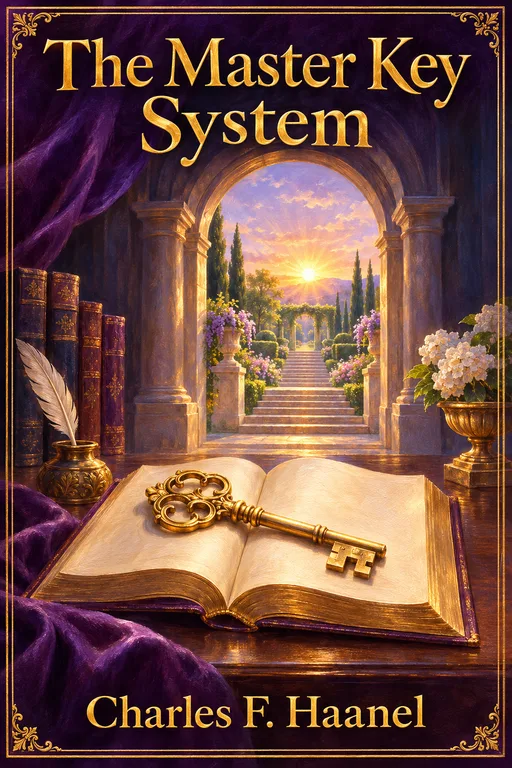
Charles Haanel: the twenty-four week course
Haanel was a St. Louis businessman who wrote The Master Key System as a correspondence course: twenty-four weekly lessons, each with an exercise, building from sitting still in a chair to concentration, visualization and the creative power of thought. It was sold privately for years. Legend has long claimed that it inspired Napoleon Hill.
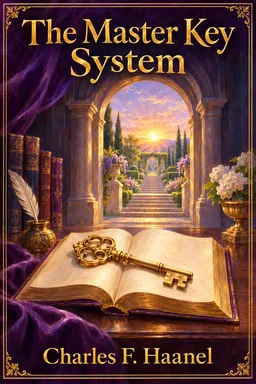
Charles F. Haanel · 1919
Twenty-four lessons, meant to be read one a week. The most structured book here.
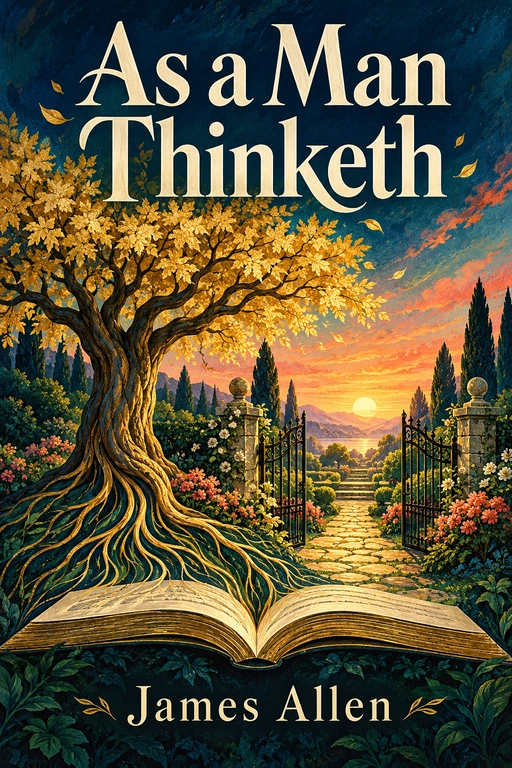
James Allen: the quiet one
As a Man Thinketh is the gentlest book on this list, and the one that has lasted best. Allen, an Englishman who left business to live simply and write, takes his title from Proverbs ("as he thinketh in his heart, so is he") and spends seven short chapters on how thought shapes character, circumstance, health and purpose. It has no technique for getting things. It is about becoming someone.
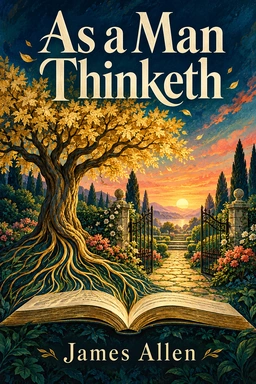
James Allen · 1903
One evening's reading, and the one to give a friend.
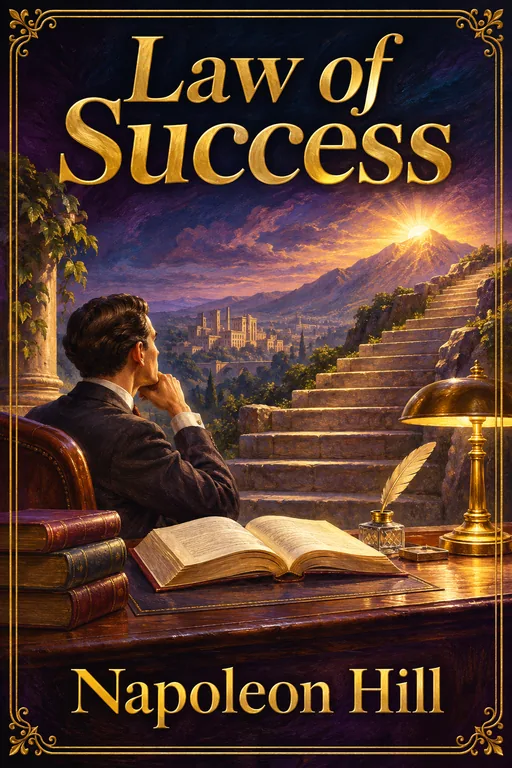
Napoleon Hill: the bridge to self-help
Hill's Think and Grow Rich (1937) is still under copyright in many places, but his first great work, Law of Success (1928), is not. It is where the "Master Mind," the "definite chief aim" and many of Hill's other famous ideas first appear, in lessons drawn from what he said were interviews with Carnegie, Ford, Edison and others.
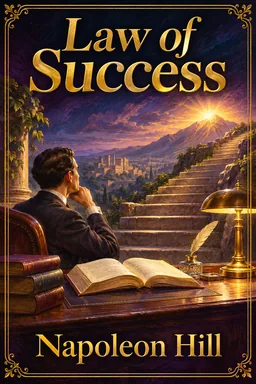
Napoleon Hill · 1928
The long, original version of everything Hill taught.
Which one should you read?
- For the core idea in an evening: As a Man Thinketh.
- For a practical method: The Science of Getting Rich.
- For a structured daily practice: The Master Key System.
- For the deeper philosophy: The Edinburgh Lectures.
- For where it went next: Neville Goddard's books in order.
Or follow our reading path New Thought, in the order it was written, which walks from Allen to Neville in seven books.
Questions people ask
- What book inspired The Secret?
- Rhonda Byrne has said she was inspired by The Science of Getting Rich by Wallace D. Wattles, published in 1910, which her daughter gave her.
- Who first wrote about the law of attraction?
- The idea runs through the New Thought writers of the late 1800s, especially Prentice Mulford. William Walker Atkinson put the phrase in a book title in 1906 with Thought Vibration, or the Law of Attraction in the Thought World.
- Are these law of attraction books free?
- Yes. Every book on this page is in the public domain and free to read online or download here.
Every book in this post
Free to read online, download, or send to your Kindle.
Your Forces and How to Use Them, Volume VI
Prentice Mulford · 1888
Thought Vibration
William Walker Atkinson · 1908
The Edinburgh Lectures on Mental Science
The Science of Getting Rich
W. D. Wattles · 1910
The Science of Being Well
The Master Key System
Charles F. Haanel · 1919
As a Man Thinketh
James Allen · 1903
Law of Success
Napoleon Hill · 1928


Keep reading
New Thought
Neville Goddard's books in order, and where the law of assumption began
Before it was a TikTok trend, the law of assumption was a set of ten short books by a Barbados-born lecturer. All ten in order, what each adds, and the 1944 page where SATS comes from.
Mind power
Florence Scovel Shinn: the 1925 affirmations behind today's manifestation trend
"Infinite Spirit, open the way." "Never violate a hunch." A New York illustrator wrote the original manifestation playbook in 1925. Here are her best lines and affirmations, from her free books.
Forgotten inventors
Did Tesla really say "3, 6, 9 is the key to the universe"? What he actually wrote
The 369 method and "energy, frequency and vibration" have never been found in Tesla's writings. Here is what the inventor really said about energy and the future, in his own lectures.