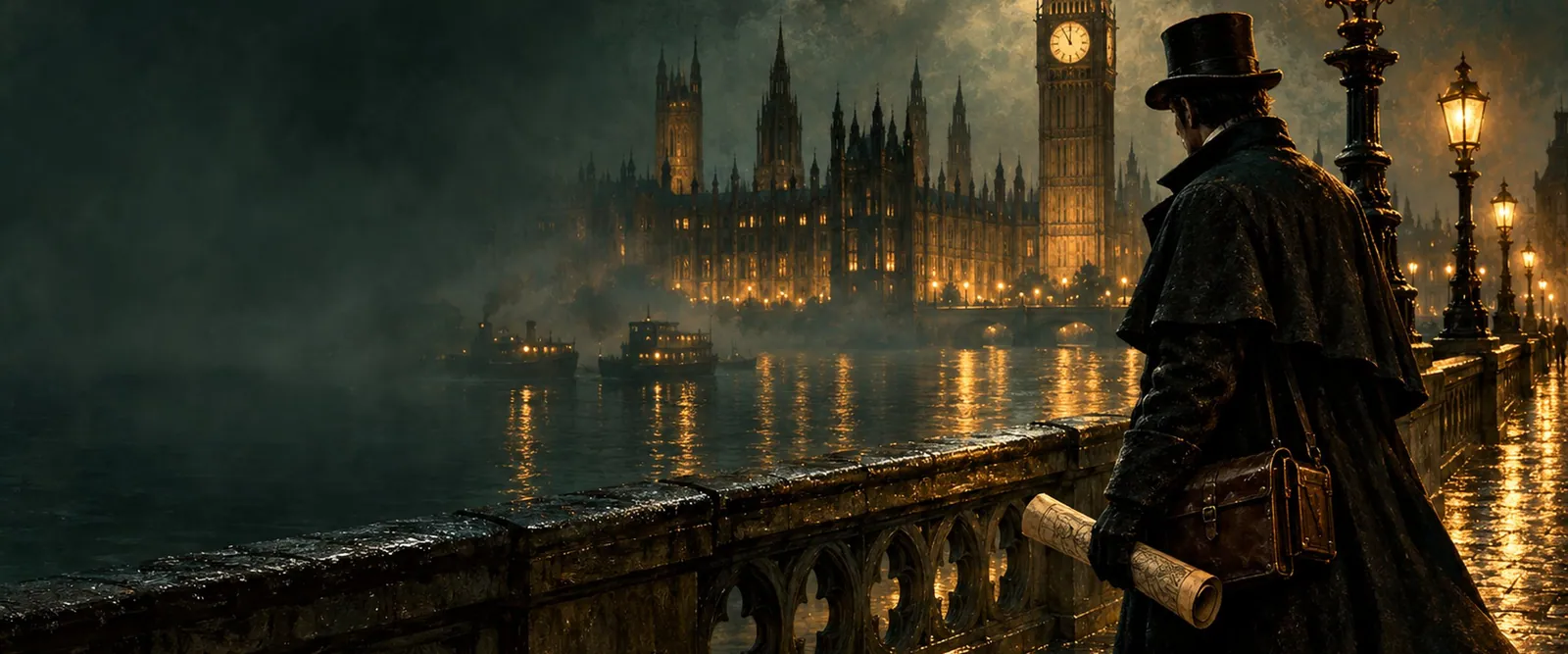
Not many years ago in the neighbourhood of Andover stood a lonely house, which went by the name of the Grange. It was enclosed in walled-in gardens, and people who passed by on the high road saw nothing of it. The house itself was squarely built—its windows were small, with old-fashioned latticed panes, and its thick walls were closely covered with ivy and other creepers of the hardy species.
It was a lonely place, standing solitary and bleak all the year round, its sole inhabitants being an old man, a young girl, and one servant.
These three inhabited a corner of the old house, living very sparsely and frugally, doing without warmth and comfort in winter and without all the gay things of life in summer. The grounds round the Grange had gone to rack and ruin; the huge kitchen garden was full of weeds, and the lawn in front of the house had been attended to by no gardener since Dr. Follett and his daughter, Nancy, took possession of the place six years ago.
People who saw them at church on Sunday said that Nancy Follett was a handsome girl; she had bright grey eyes, good features, and quantities of beautiful hair; her face had strength about it, her lips were firmly moulded; she had a very upright and erect carriage, but she looked like a girl who lived under a shadow, and during the six years of her residence at the Grange she made but one acquaintance.
The neighbours would have been kind to her if she had let them, but Dr. Follett received no visitors, and strictly forbade his daughter to make friends for herself in the neighbourhood of her dismal home. How she got to know Adrian Rowton was a mystery; how he obtained a footing in the dismal old house was the wonder of the country side. But then Rowton was a man who seemed to do what he liked wherever he went.