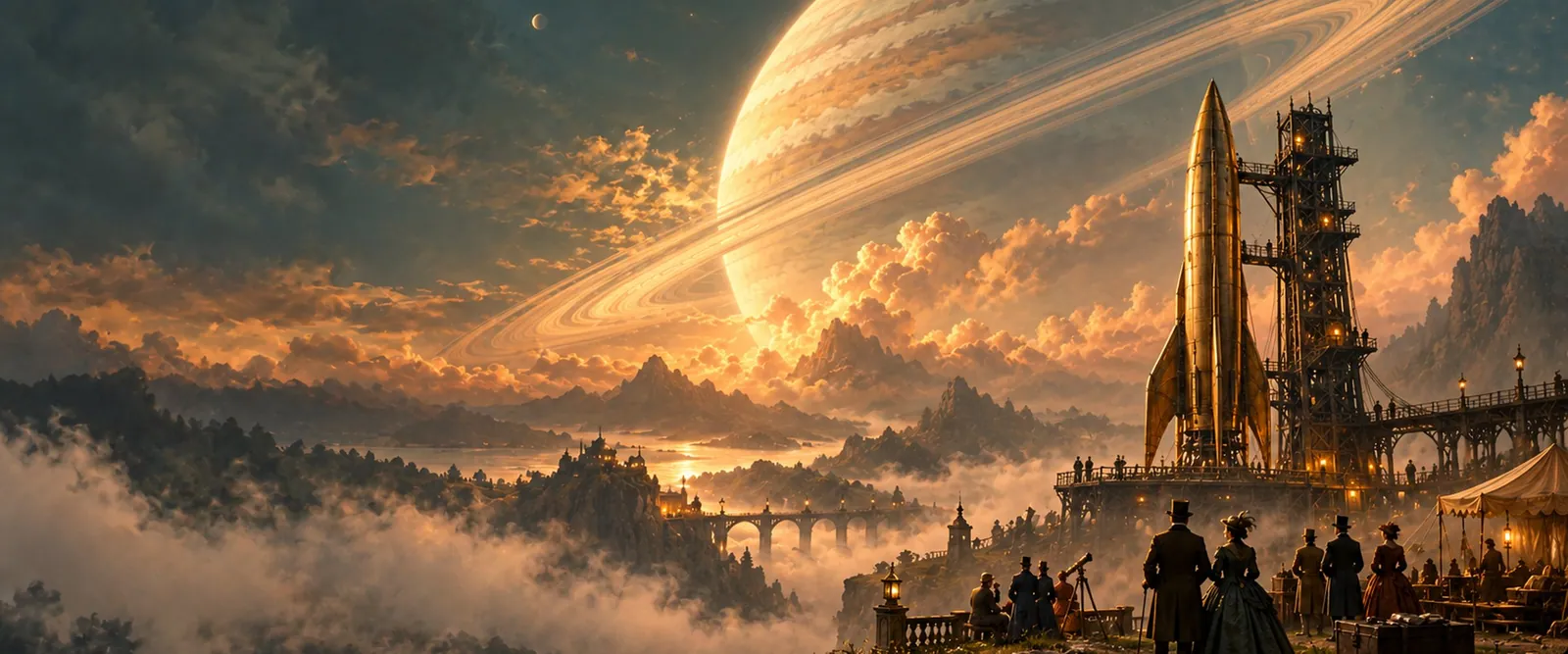
It is 1960, Anno Domini. The Earth, notwithstanding many dire predictions of charlatans and religious fanatics, and in spite of numerous cataclysms, conflagrations and political upheavals, was rotating serenely on its axis.
The Diana Young Ladies’ Seminary, situated upon the picturesque hills of Cornwall on the Hudson, is a few miles north of the West Point Military Academy. The seminary buildings, having formerly been the palatial homestead of a multi-millionaire, about half a century previously had been bequeathed to the State of New York, with ample endowments for its maintenance and development. It had long since become one of the finest institutions of learning of its kind, not only of America, but of the whole civilized world.
The donor of this magnificent seat of knowledge for young ladies was a man of “polarity,” of positive and negative action and reaction. He was in fact a typical incarnation and embodiment of a dualism, immortalized by the fertile fancy of Robert Louis Stevenson, in his story of “Dr. Jekyll and Mr. Hyde.” While on the one hand he had an apparently irresistible and monomaniacal cunning in robbing his fellow men by monopolizing all the necessities of life, crushing with hellish unscrupulousness all competition in every channel of industry, and strewing his wake with industrial wrecks,—on the other hand he busied himself with the erection of hospitals and churches, and in endowing colleges with a princely liberality, commensurate to his other nature.
Emerson, the philosopher, says “The whole universe is so, and so every one of its parts,” that “an inevitable dualism bisects nature,” each thing being a half and suggesting its complement. As the mammoth Californian redwood tree, which with its towering height looks overpoweringly stupendous when compared with the tiny otaheite orange or dwarf Japanese plant, so was the difference in power of acquisitiveness and possibilities of dispensation between this colossus compared with ordinary mortals.