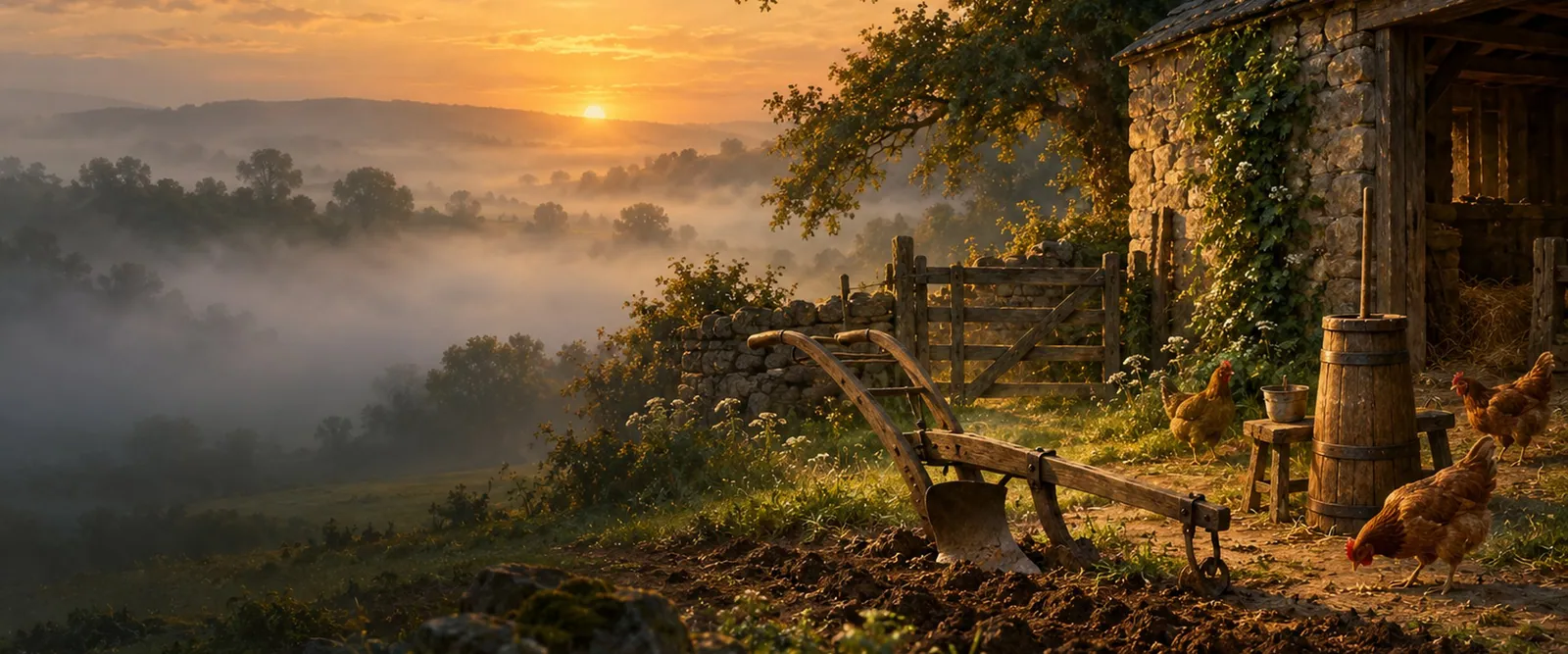
While one can find instruction in their practice even today, one can benefit even more from their agricultural philosophy, for the characteristic of the American farmer is that he is in too much of a hurry.
The ancient literature of farm management was voluminous. Varro cites fifty Greek authors on the subject whose works he knew, beginning with Hesiod and Xenophon. Mago of Carthage wrote a treatise in the Punic tongue which was so highly esteemed that the Roman Senate ordered it translated into Latin, but, like most of the Greeks,[2] it is now lost to us except in the literary tradition.
Columella says that it was Cato who taught Agriculture to speak Latin. Cato’s book, written in the middle of the second century B. C, was the first on the subject in Latin; indeed, it was one of the very first books written in that vernacular at all. Of the other Latin writers whose bucolic works have survived, Varro and Virgil wrote at the beginning of the Augustan Age and were followed by the Spanish Columella under Tiberius, and by Pliny (with his Natural History) under Titus. After them (and “a long way after,” as Mr. Punch says) came in the fourth century the worthy but dull Palladius, who supplied the hornbook used by the agricultural monks throughout the Dark Ages.
He was an upstanding man, but as coarse as he was vigorous in mind and in body. Roman literature is full of anecdotes about him and his wise and witty sayings.
Unlike many men who have devoted a toilsome youth to agricultural labour, when he attained fame and fortune he maintained his interest in his farm, and wrote his De re rustica in green old age. It tells what sort of farm manager he himself was, or wanted to be thought to be, and, though a mere collection of random notes, sets forth more shrewd common sense and agricultural experience than it is possible to pack into the same number of English words. It remains today of much more than antiquarian interest.