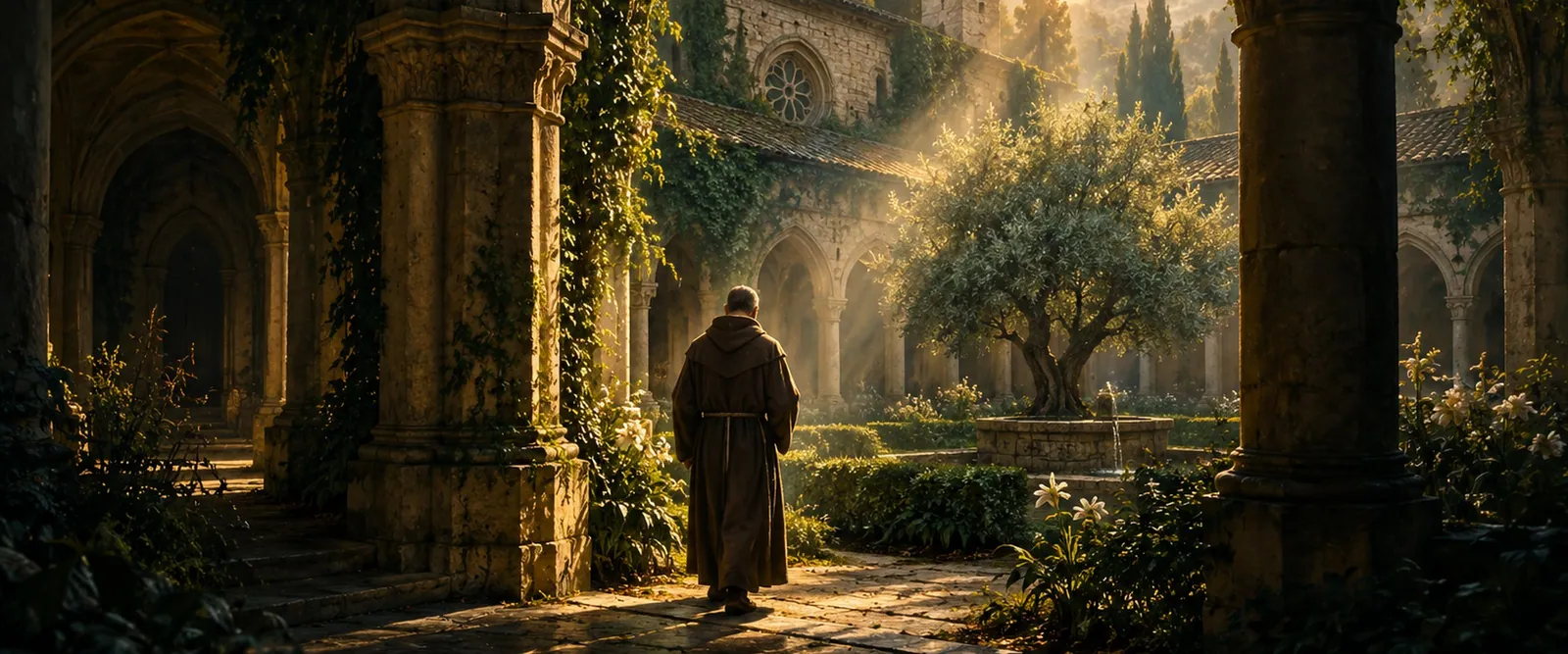
Now, if the story of one man’s career could suffice to destroy the mistaken idea that the mystic is an unpractical dreamer, that man would surely be the Majorcan Ramón Lull, the ‘Apostle of Africa.’ Lull lived far back in the thirteenth century, not long after the days of St. Francis of Assisi, whose disciple he was. He gives us, as it were, a prevision of the splendours of that Golden Age of Mysticism which dawned for Spain three hundred years after his birth. His mystic writings—and especially his BOOK OF THE LOVER AND THE BELOVED —are full of the purest and noblest spirituality, compounded with the quintessence of love. ‘If ye will have fire,’ he cries, ‘O ye that love, come light your lanterns at my heart.’ His famous phrase, ‘He who loves not lives not,’ sums up his inspiration. Yet Lull was no cloistered visionary. His life is full of romance and adventure: so crowded with incident is it that many pages will not suffice even to summarise its principal happenings. His capacities showed the rare combination of scholar and man of affairs: he was both these, and he was also the man of God. To the service of his Master, for Whom alone he lived, and for Whom he died, Lull was able to bring the full and complete tribute of an efficient and active body, a superb mind, and an ardent, unconquerable spirit.
Ramón Lull was born in Palma, the capital of Majorca, on January 25, 1235. His father had taken part in the conquest of Majorca from the Saracens some six years earlier, and for his services had received the gift of an estate, which his son inherited. The boy was brought up as a page in the royal court of Majorca, and, in spite of a sound religious education and the interest and favour of the King, he had hardly reached years of discretion when he began to lead a careless and dissolute life. His biographers tell of how the King, to stop his degrading practices, married him to a certain D a. Blanca Picañy, but without thereby reforming him in the least.