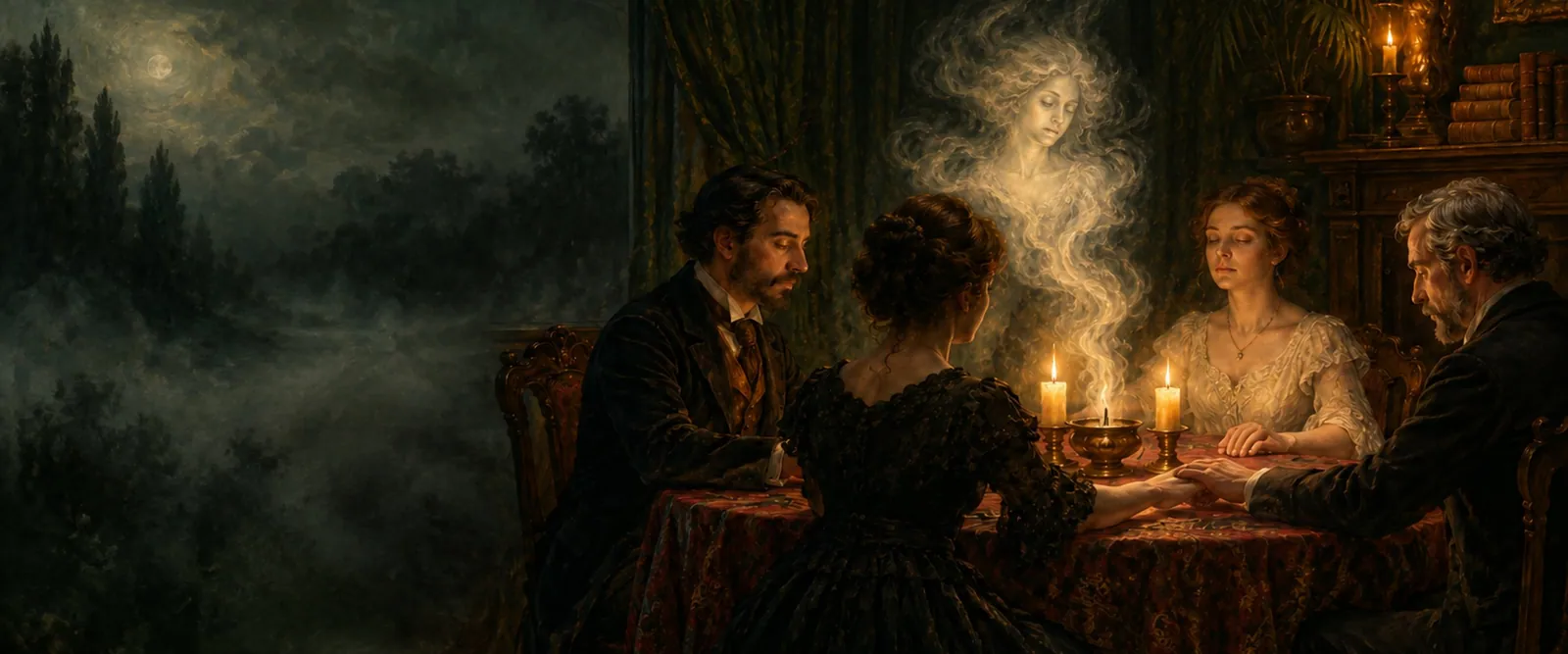
We appear, there is a short flutter of joys and pains, a bright glimmer of smiles and tears, and we are gone. But whence did we come? And whither do we go? Can human thought divine the answer?
It adds no little solemnity and pathos to these reflections to remember that every considerate person in the unnumbered successions that have preceded us, has, in his turn, confronted the same facts, engaged in the same inquiry, and been swept from his attempts at a theoretic solution of the problem into the real solution itself, while the constant refrain in the song of existence sounded behind him, “One generation passeth away, and another generation cometh; but the earth abideth forever.” The evanescent phenomena, the tragic plot and scenery of human birth, action, and death, conceived on the scale of reality, clothed in
“The sober coloring taken from an eye That hath kept watch o’er man’s mortality,”
and viewed in a susceptible spirit, are, indeed, overwhelmingly impressive. They invoke the intellect to its most piercing thoughts. They swell the heart to its utmost capacity of emotion. They bring us upon the bended knees of wonder and prayer.
Widely regarding the history of human life from the beginning, what a visionary spectacle it is! How miraculously permanent in the whole! how sorrowfully ephemeral in the parts! What pathetic sentiments it awakens! Amidst what awful mysteries it hangs! The subject of the derivation of the soul has been copiously discussed by hundreds of philosophers, physicians, and poets, from Vyasa to Des Cartes, from Galen to Ennemoser, from Orpheus to Henry More, from Aristotle to Frohschammer. German literature during the last hundred years has teemed with works treating of this question from various points of view. The present chapter will present a sketch of these various speculations concerning the commencement and fortunes of man ere his appearance on the stage of this world.