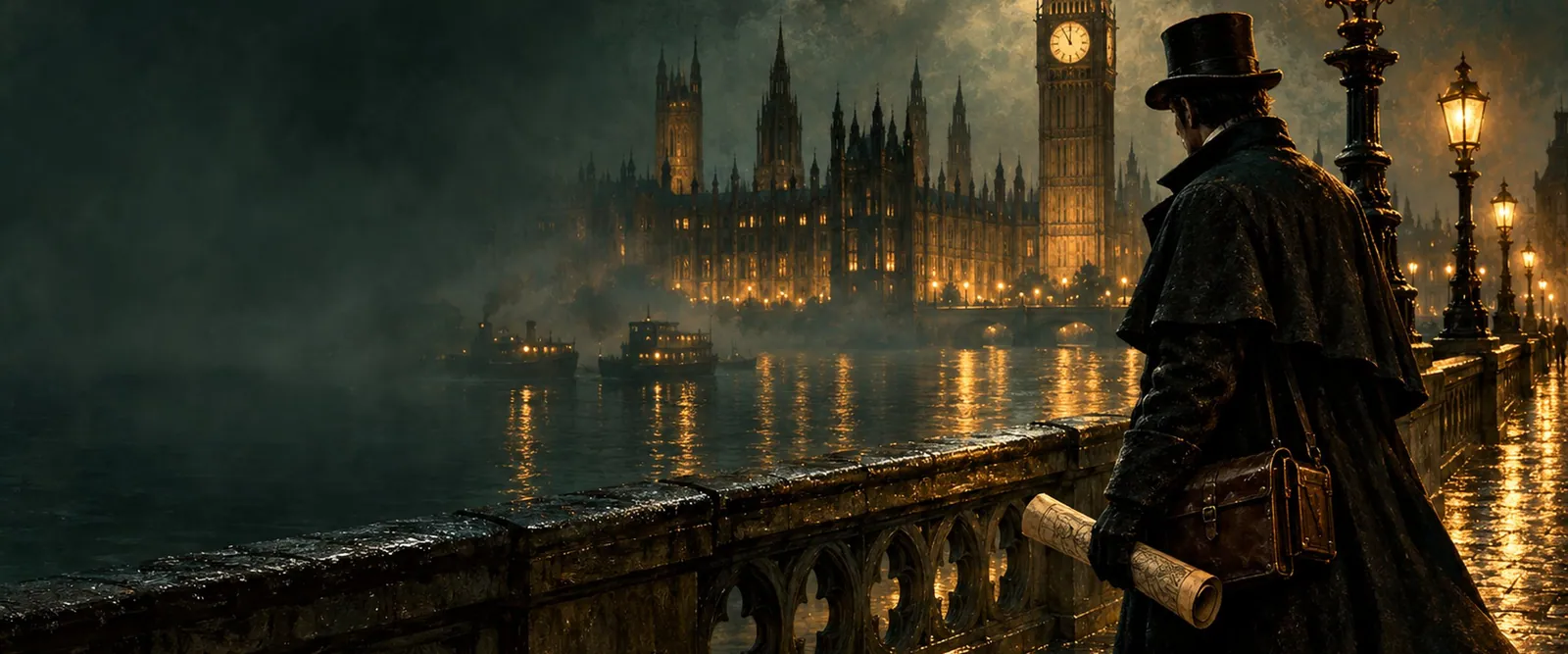
As Lady Raytham drew aside the long velvet curtains, she looked down into Berkeley Square. It was half-past four o’clock on a cheerless February evening. Rain and sleet were falling and a thin yellow mist added to the gloom of the dying day. An interminable string of cars and taxicabs was turning toward Berkeley Street, their shining black roofs reflecting the glare of the overhead light that had just then hissed and spluttered to life.
She looked blankly toward the desolation of the gardens, a place of bare-limbed trees and shivering shrubs—stared, as though she expected to see some fog wraith take a definite and menacing shape and give tangible form to the shadows that menaced reason and life.
She was a woman of twenty-eight, straight and slim. Hers was the type of classical beauty which would defy the markings of age for the greater part of a lifetime. A fascinating face, calm, austere. Her eyes were a cold English gray. You might imagine her the patrician abbess of some great conventual establishment, or a lady of broad manors defending inexorably the stark castle of her lord against the enemy who came in his absence. Analyse her face, feature by feature, put one with the other, and judge her by the standards which profess to measure such things, and brow and chin said “purpose” with unmistakable emphasis.
She was not in her purposeful mood now; rather was she uncertain and irritable, the nearest emotions to fear that she knew.
She let the curtains fall back until they overlapped, and walked across to the fireplace, glancing at the tiny clock. The salon was half lit; the wall sconces were dark, but the big lamp on the table near the settee glowed brightly. This room bore evidence of money lavishly spent. The greater part of its furnishings would one day reach the museums of millionaire collectors; three pictures that hung upon the apple-green walls were earmarked for the National Gallery.