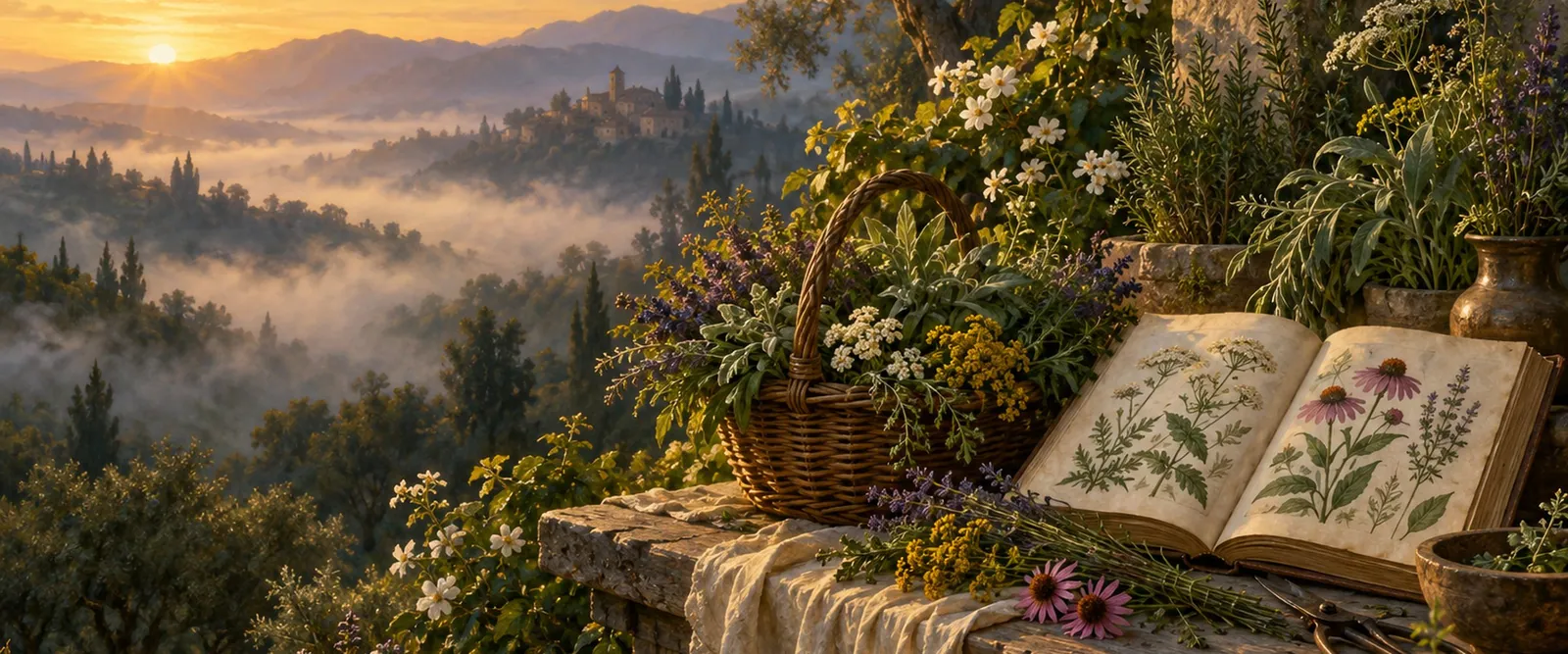
There is a certain pathos attached to the fragments from any great wreck, and in studying the few Saxon manuscripts, treating of herbs, which have survived to our day, we find their primary fascination not so much in their beauty and interest as in the visions they conjure up of those still older manuscripts which perished during the terrible Danish invasions. That books on herbs were studied in England as early as the eighth century is certain, for we know that Boniface, “the Apostle of the Saxons,” received letters from England asking him for books on simples and complaining that it was difficult to obtain the foreign herbs mentioned in those we already possessed. But of these manuscripts none have survived, the oldest we possess being of the tenth century, and for our knowledge of Anglo-Saxon plant lore we look chiefly to those four important manuscripts—the Leech Book of Bald, the Lacnunga and the Saxon translations of the Herbarium of Apuleius and the so-called Περὶ Διδαξέων.
Apart from their intrinsic fascination, there are certain considerations which give these manuscripts a peculiar importance. Herb lore and folk medicine lag not years, but centuries, behind the knowledge of their own day. Within living memory our peasants were using, and in the most remote parts of these islands they use still, the herbal and other remedies of our Saxon ancestors. They even use curiously similar charms. The herb lore recorded in these manuscripts is the herb lore, not of the century in which they were written, but of the dim past ages pictured in the oldest parts of Widsith and Beowulf. To the student of English plant lore, the Herbarium of Apuleius and the Περὶ Διδαξέων are less interesting because they are translations, but the more one studies the original Saxon writings on herbs and their uses, the more one realises that, just as in Beowulf there are suggestions and traces of an age far older than that in which the poem was written, so in these manuscripts are embedded beliefs which carry us back to the dawn of history. It is this which gives this plant lore its supreme interest.