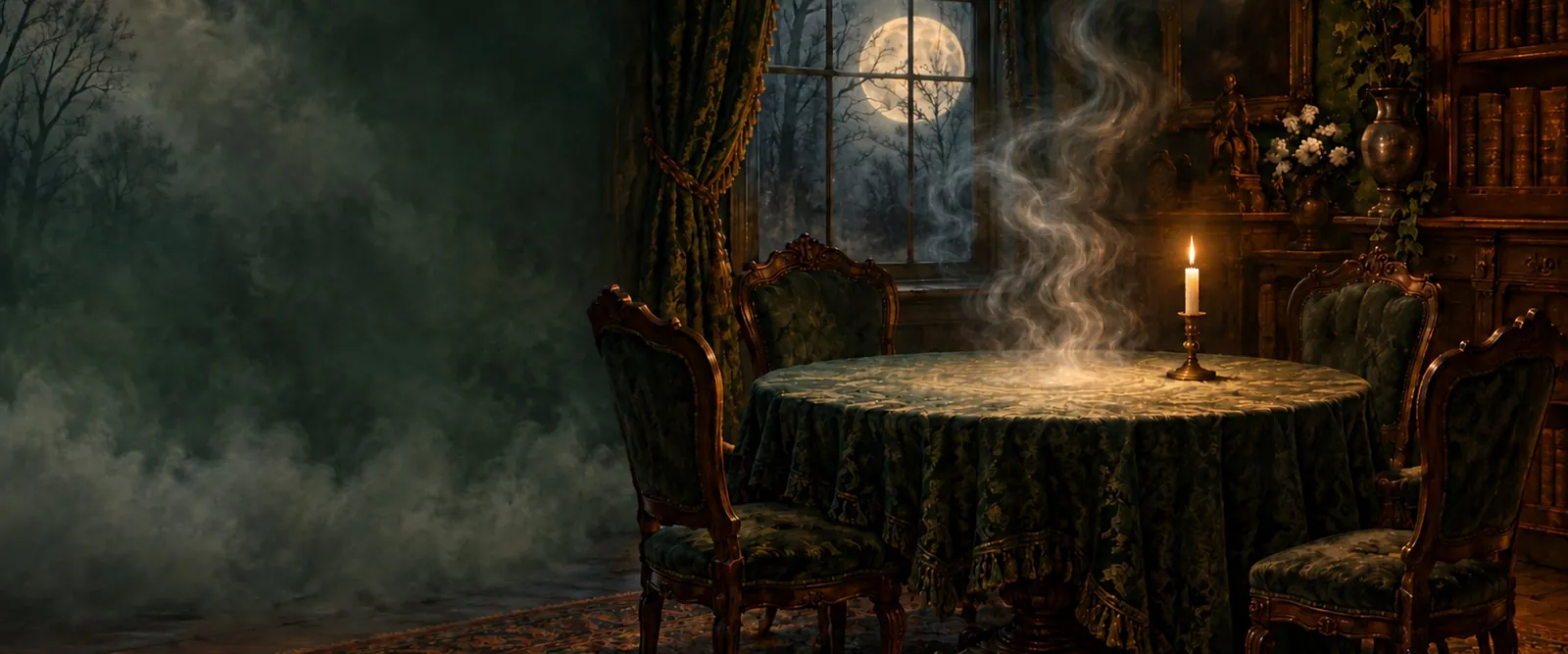
This continuing presence of the weird in literature shows the popular demand for it and must have some basis in human psychosis. The night side of the soul attracts us all. The spirit feeds on mystery. It lives not by fact alone but by the unknowable, and there is no highest mystery without the supernatural. Man loves the frozen touch of fear, and realizes pure terror only when touched by the unmortal. The hint of spectral sounds or presences quickens the imagination as no other suggestion can do, and no human shapes of fear can awe the soul as those from beyond the grave. Man’s varying moods create heaven, hell, and faery wonder-lands for him, and people them with strange beings.
Man loves the supernatural elements in literature perhaps because they dignify him by giving his existence a feeling of infinity otherwise denied. They grant him a sense of being the center of powers more than earthly, of conflicts supermortal. His own material life may be however circumscribed and trivial yet he can loose his fancy and escape the petty tragedies of his days by flight beyond the stars. He can widen the tents of his mortal life, create a universe for his companionship, and marshal the forces of demons and unknown gods for his commands. To his narrow rut he can join the unspaced firmament; to his trivial hours add eternity; to his finite, infinity. He is so greedy of power, and has so piteously little that he must look for his larger life in dreams and in the literature of the supernatural.
But, whatever be the reasons, there has been a continuity of the ghostly in literature, with certain rise and fall of interest. There is in modern English fiction, as likewise in poetry and the drama, a great extent of the supernatural, with wide diversity of elements. Beginning with the Gothic romance, that curious architectural excrescence that yet has had enormous influence on our novel, the supernatural is found in every period and in every form of fiction. The unearthly beings meet us in all guises, and answer our every mood, whether it be serious or awed, satiric or humoresque.