

Cold plunges are everywhere: in backyards, gyms and podcast studios, with ice baths and cold showers sold as the secret to energy, focus and resilience. Then there is "grounding," walking barefoot on the earth. Both are presented as new discoveries. In the 1880s, all of Europe was doing them, because of one country priest.
The priest who bathed in the Danube
Sebastian Kneipp was a poor weaver's son in Bavaria who wanted to become a priest. As a student he fell seriously ill, generally said to have been tuberculosis, and his doctor could do nothing. Then, he writes in My Water Cure (1886), he came across a little old book on the healing power of cold water:
This little book was the first straw at which I grasped; soon it became the staff on which the patient could lean; to-day I regard it as the lifeboat sent by a merciful Providence in the hour of my greatest need.
In the winter of 1849, he began to plunge into the river:
Two or three times a-week I sought out a lonely spot, and bathed for some minutes in the Danube.
He ran to the river and ran back to a warm room. He recovered, was ordained, and became the parish priest of Wörishofen, where he treated his parishioners with cold water for decades. When his book came out, the sick came from all over Europe. By the time it reached English, its translator reported that his photograph was in every shop window, and "'Pfarrer Kneipp' bread, coffee, and linen are everywhere advertised." (Kneipp malt coffee is still sold in Germany today, and Wörishofen is still a spa town.)

Sebastian Kneipp · 1886
Kneipp's own 1886 handbook of cold water, wet grass and herbs, the book that started a European craze.
The rules: colder, but shorter
The most striking thing about Kneipp's method, compared with some modern ice-bath advice, is how short it is. He wanted cold water, as cold as possible:
The colder the better is the motto which experience has taught me to cling to.
But only for a moment. In The Kneipp Cure he says:
To remain one minute in the cold-water-bath is wiser and safer than to remain there for 5 minutes.
In Thus Shalt Thou Live, recommending a waist-deep "half-bath" to young people, he is even plainer: "All must be over in one minute at the longest."
He had two more rules that he repeated again and again. Never go into the cold when you are already chilled: one of his applications "should never be employed when the body is cold or shivering." And do not towel off afterward. Let the body warm itself:
Without drying, the bather resumes his clothes and takes exercise, at least half an hour, until he is thoroughly warm and dry.
That is the theory in one line: the cold is a short shock, and the real work is the body's own reaction as it rewarms.
Barefoot in wet grass: the original grounding
Kneipp's most famous prescription, and the one that made people laugh at his patients, was walking barefoot in wet grass. His translator describes visitors to Wörishofen having their portrait taken "walking barefoot in wet grass with a pair of boots held carelessly in the hand." Kneipp himself is enthusiastic:
In favourable weather, walking barefoot in wet grass is not to be surpassed in its effects.
Where there was no grass, wet stones would do. In winter, he recommended walking barefoot in fresh snow, for a short time: "as a general rule, from three to four minutes will be sufficient." He prescribed the same exercises for children, and had a niece, the translator notes, who was "always barefoot and bareheaded" and looked like "a splendid advertisement" for the system.
Today's grounding enthusiasts explain the benefit with electrons from the earth. Kneipp's explanation was simpler: hardening. He believed that people had grown soft, overdressed and shut indoors, and that short, regular exposure to cold toughened the whole body.

Sebastian Kneipp · 1896
The fuller English edition of Kneipp's method, with his baths, wraps, affusions and herbal teas.
Before Kneipp: Priessnitz and the Victorian water cure
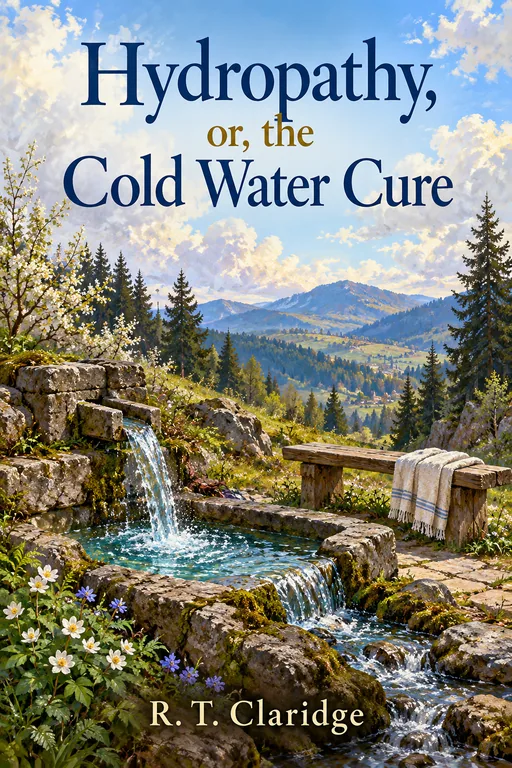
Kneipp was not the first. In the 1820s, a Silesian farmer named Vincent Priessnitz began treating the sick with cold water, wet sheets and mountain air at Gräfenberg, and by the 1840s "hydropathy" had become a fashion in Britain. The English writer R. T. Claridge, who went to see him, praised "that retiring, that most unpretending man, Vincent Priessnitz; who never caused a line to be written."
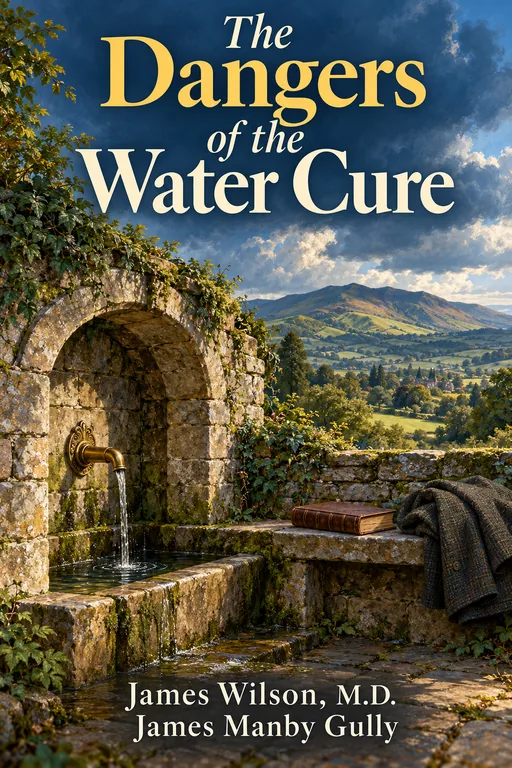
In England, the water-cure doctors James Wilson and James Manby Gully opened an establishment at Malvern. Their patients included Charles Darwin, who went there in 1849 for his chronic illness. Their book The Dangers of the Water Cure (1843) answered the doctors who called the treatment dangerous.
Old advice, modern caution
Kneipp was a priest, not a doctor, and many of his cures are anecdotes. Modern research on cold exposure is promising on some things, like mood and alertness, and unclear on many others. Cold water can also be dangerous, especially for people with heart conditions, and sudden cold immersion can trigger cold-shock gasping. Kneipp's own caution, short exposure and never when already chilled, is a good place to start, and a doctor is the right person to ask before you begin.
- Thus Shalt Thou Live

- Hydropathy, or, the Cold Water Cure
- The Dangers of the Water Cure
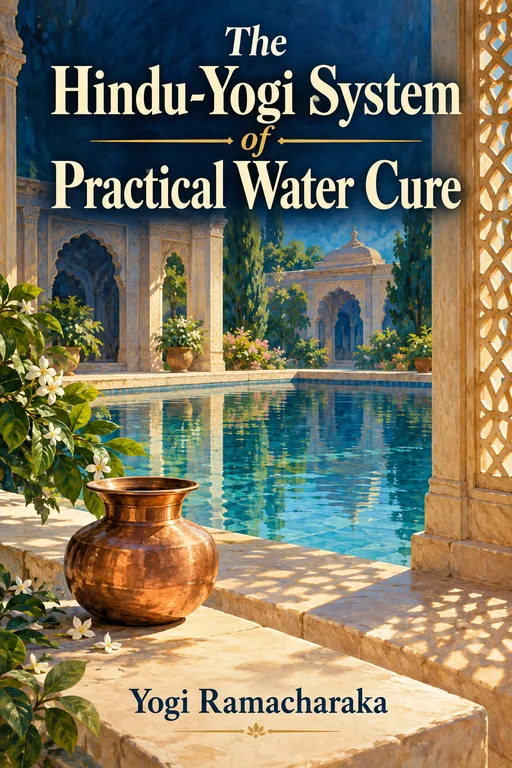
- The Hindu-Yogi System of Practical Water Cure


For more old health wisdom that is trending again, see the law of attraction books before The Secret.
Questions people ask
- Who invented the cold plunge?
- Cold bathing is ancient, but the modern cold-water method was popularized in the nineteenth century by Vincent Priessnitz in Silesia and then by Father Sebastian Kneipp in Bavaria, whose My Water Cure (1886) became a European bestseller.
- How long did Kneipp say to stay in cold water?
- Very briefly. "To remain one minute in the cold-water-bath is wiser and safer than to remain there for 5 minutes." He also said never to start when already cold or shivering.
- Did Kneipp recommend walking barefoot?
- Yes, especially in wet grass, which he said "is not to be surpassed in its effects," and on wet stones or fresh snow for a few minutes.
- Can I read Kneipp's books free?
- Yes. My Water Cure, The Kneipp Cure and Thus Shalt Thou Live are all public domain and free to read here.
Every book in this post
Free to read online, download, or send to your Kindle.
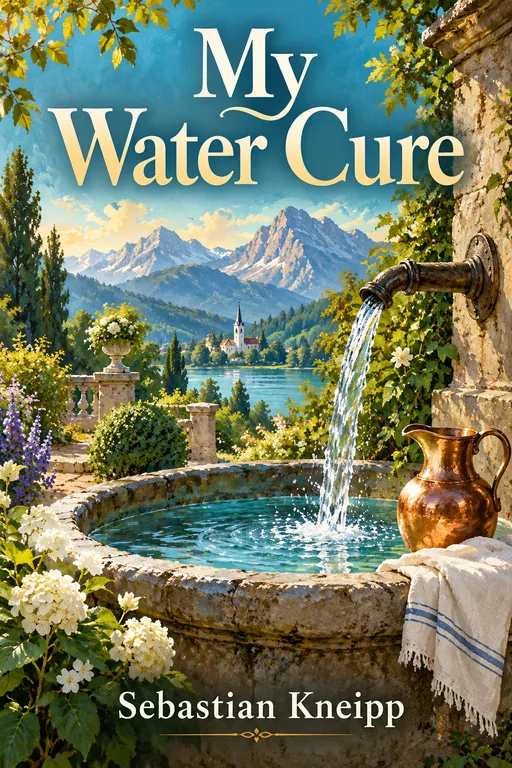
My Water Cure
Sebastian Kneipp · 1886

The Kneipp Cure
Sebastian Kneipp · 1896
Thus Shalt Thou Live
Sebastian Kneipp · 1894
Hydropathy, or, the Cold Water Cure
R. T. Claridge · 1842
The Dangers of the Water Cure
James Wilson, M.D. and James Manby Gully · 1843
The Hindu-Yogi System of Practical Water Cure
Yogi Ramacharaka · 1909


Keep reading
Old health
Mouth taping and box breathing are 120 years old: the forgotten breathwork books
Nose breathing, the complete breath, a 6-3-6-3 rhythm: today's breathwork trends were all in a little book from 1904 by a Chicago lawyer writing as a yogi. Here it is, with the exercises, free.
Old health
Intermittent fasting is 130 years old: the doctor who said skip breakfast
Long before 16:8, a country doctor in Pennsylvania told his patients to give up breakfast. Meet the forgotten fasting pioneers, from Dewey to Upton Sinclair, and read their books free.
New Thought
The law of attraction books that came before The Secret
The Secret began with a 1910 book its author was handed in a hard year. Here are the original law of attraction books it drew on, from Mulford to Wattles to Haanel, all free to read.