
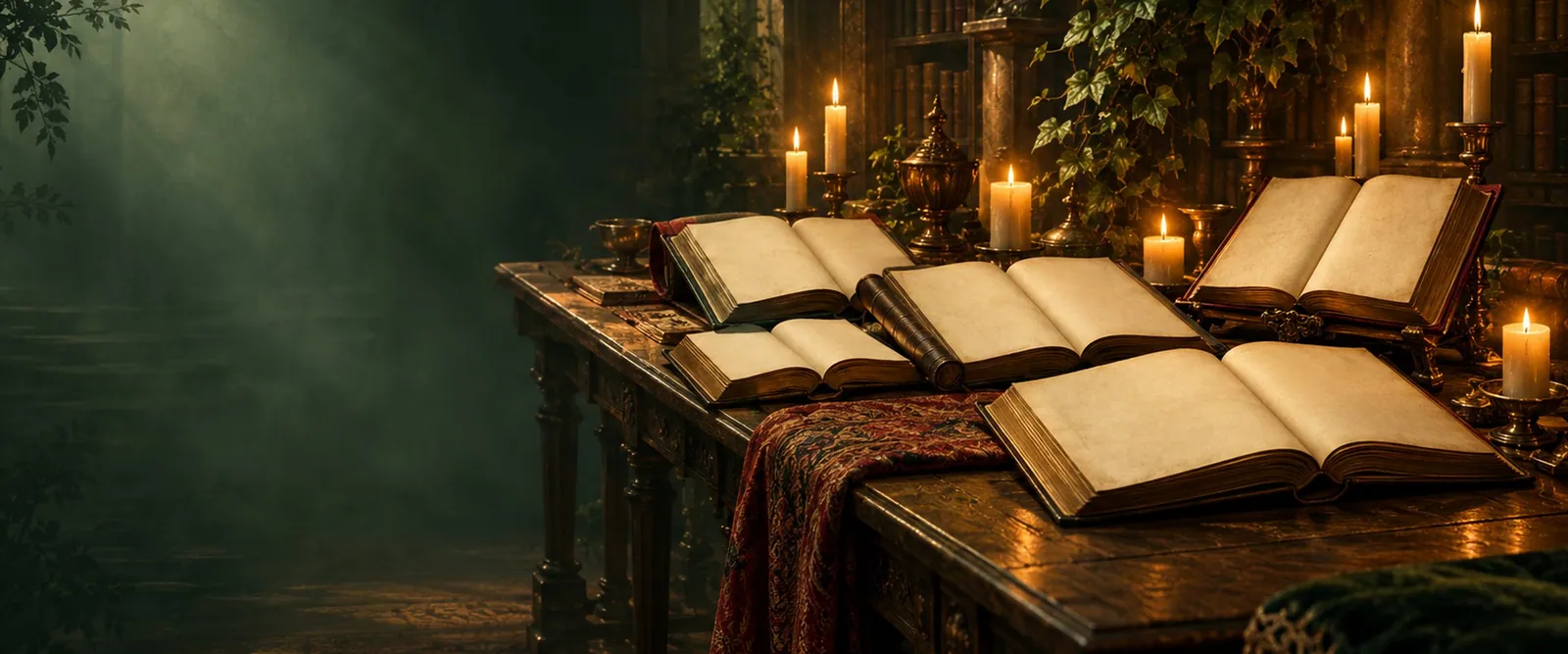
The Egyptian Book of the Dead sounds like a sinister spellbook, and Hollywood has treated it as one ever since The Mummy. The real thing is much more interesting, and much more human. It is the ancient Egyptians' guidebook to surviving death, and at its heart is a moral test that every one of us would recognize.
It was not a book, and that was not its name
The great Egyptologist E. A. Wallis Budge, Keeper of Egyptian antiquities at the British Museum, begins by clearing this up:
The title "Book of the Dead" is somewhat unsatisfactory and misleading, for the texts neither form a connected work nor belong to one period.
The name was invented in the nineteenth century by early Egyptologists. The Egyptians called these texts Per-t em hru, the chapters of "Coming Forth by Day." They were spells, hymns and prayers, written on papyrus rolls, illustrated in color and placed in the tomb, so that the dead could pass safely through the underworld and come out into the light again. Rich families commissioned their own selection. The most famous copy, made for a scribe named Ani around 1250 BC, is about twenty-four meters long and now in the British Museum.
Budge's guide to the Book of the Dead and the Papyrus of Ani, with a free audiobook.
The weighing of the heart
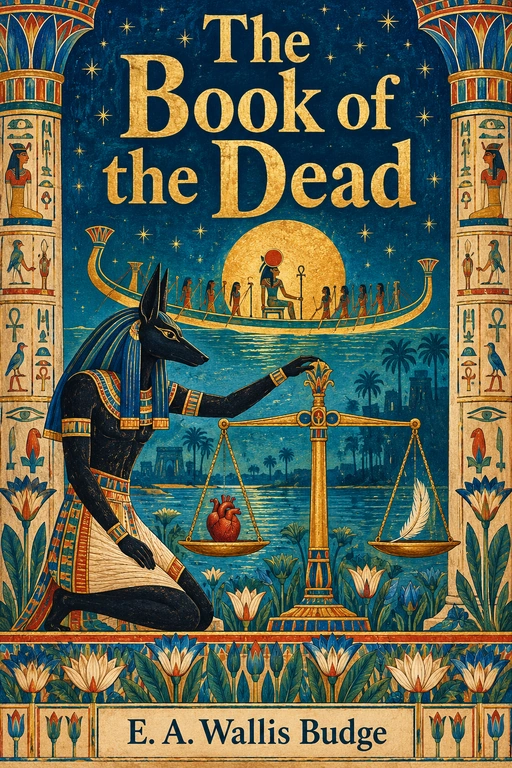
The climax of the journey is a trial. The dead person is led into the Hall of the Two Truths, before the god Osiris. There, the heart, which the Egyptians believed held a person's mind, will and conscience, is placed on a scale, balanced against a feather:
Ani's heart is seen in one pan of the Balance, and in the other is the feather, symbolic of truth and righteousness.
The feather is the sign of Maat, the goddess of truth, justice and cosmic order. The jackal-headed god Anubis tends the scales. The ibis-headed Thoth writes down the result. And beside them waits a monster, part crocodile, part lion, part hippopotamus:
The monster Āmemit, the Eater of the Dead, i.e., of the hearts of the wicked who were condemned in the Judgment of Osiris.
If the heart is heavy with wrongdoing, Ammit devours it, and the person ceases to exist. If it balances, they go on to the fields of paradise.
The 42 confessions
Before the weighing, the dead person addresses forty-two divine judges, one by one, and declares their innocence. Egyptologists call this the "Negative Confession," from Chapter 125, and it is one of the oldest moral codes in the world. Here is part of it, in Budge's translation:
I have not sinned against men. I have not oppressed [my] kinsfolk. … I have not wrought evil. … I have not caused pain. I have not let any man hunger. I have made no one to weep. I have not committed murder.
Some of it is ethics we still share. Some of it is gloriously practical, the confessions of a farming people who lived by the Nile:
I have not added to the weights of the scales. I have not misread the pointer of the scales. I have not taken milk from the mouths of children. I have not driven cattle from their pastures. … I have not stopped water [when it should flow].
It ends with a cry: "I am pure. I am pure. I am pure. I am pure."
These lines are the source of the "42 Laws of Maat" or "42 Principles of Ma'at" you see shared online, often rewritten as positive affirmations ("I honor..."). The original is in the negative, a list of things the person swears they did not do.
Magic for the afterlife
Not all of it is so lofty. The Book of the Dead is also full of spells to stop your heart from testifying against you, to keep your name, to turn into a falcon or a lotus, and to make the little shabti figures in the tomb come alive and do your farm work in the next world. Budge's Egyptian Magic explains how the Egyptians thought words of power worked.
E. A. Wallis Budge · 1901
Budge's 1901 study of Egyptian amulets, spells and words of power.
P. le Page Renouf · 1904
Peter le Page Renouf's full translation of the chapters, completed by Édouard Naville, from the original scans.


Tibet has a "Book of the Dead" too, a completely different text with the same goal: getting the dead safely through. We explain it in the Tibetan Book of the Dead and the bardo.
Questions people ask
- What is the Egyptian Book of the Dead?
- A collection of funerary spells, hymns and prayers, written on papyrus and buried with the dead to help them pass through the underworld. The Egyptians called it the chapters of "Coming Forth by Day."
- What is the weighing of the heart?
- The final judgment in the Egyptian afterlife. The dead person's heart is weighed against the feather of Maat, the goddess of truth. If it is heavy with sin, the monster Ammit, "the Eater of the Dead," devours it.
- What are the 42 laws of Maat?
- They come from the "Negative Confession" in Chapter 125, where the dead person declares to forty-two judges that they have not committed forty-two sins, such as "I have not committed murder" and "I have made no one to weep."
- Can I read the Egyptian Book of the Dead free?
- Yes. Budge's guide and Renouf's translation are public domain and free to read here.
Every book in this post
Free to read online, download, or send to your Kindle.
The Book of the Dead
Egyptian Magic
Cover of Egyptian MagicEgyptian Magic
E. A. Wallis Budge · 1901
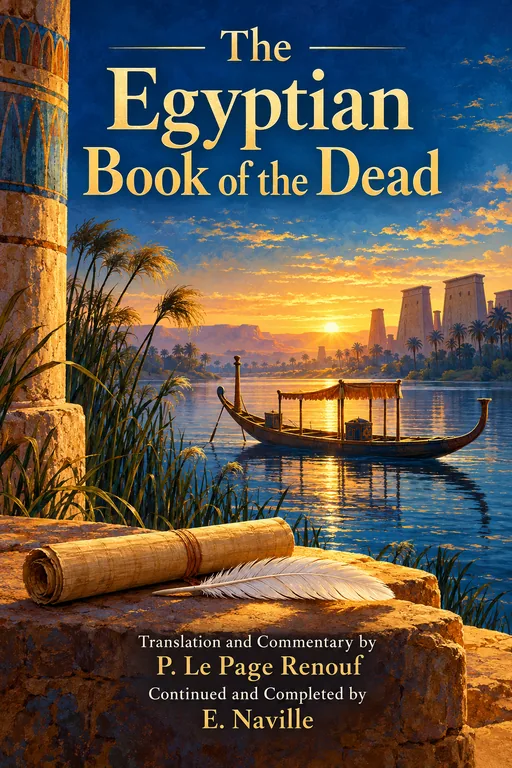
The Egyptian Book of the Dead
P. le Page Renouf · 1904
Legends of the Gods
E. A. Wallis Budge · 1912
The Literature of the Ancient Egyptians
E. A. Wallis Budge · 1914
The Tibetan Book of the Dead
Walter Yeeling Evans-Wentz · 1927


Keep reading
Eastern wisdom
The Tibetan Book of the Dead explained: the bardo, the Clear Light and the 49 days
Read aloud beside the dying, it guides the mind through 49 days between death and rebirth. Here is what the Bardo Thodol teaches, in the 1927 translation that inspired Jung, Leary and the Beatles.
Reading guides
Lost Library vs Project Gutenberg: what's the difference, and when to use each
Project Gutenberg is the great free library of the internet, and most of our books are built on its work. Here is an honest look at what each one does best, and which to use when.
The public domain
Public Domain Day 2027: the books, films and songs of 1931 that become free
Dracula, Frankenstein, The Good Earth, Faulkner, Hammett, Nancy Drew and "As Time Goes By": on January 1, 2027, works from 1931 enter the US public domain. Here is what is coming, and the fine print.