

Every November the first Thanksgiving gets told again, usually as a picture: Pilgrims in buckles, a long table, a roast turkey. The people who were actually there left their own accounts, and they are both stranger and more moving than the picture. The best of them is free here: the history kept by William Bradford, governor of Plymouth for most of its first thirty years.
Before the feast: the winter half of them died
The Mayflower reached Cape Cod in November 1620. The settlers spent the winter building on the site of Plymouth, and it nearly destroyed them. Bradford writes:
But soon a most lamentable blow fell upon them. In two or three months' time half of their company died, partly owing to the severity of the winter, especially during January and February, and the want of houses and other comforts; partly to scurvy and other diseases, which their long voyage and their incommodious quarters had brought upon them.
"Of all the hundred odd persons," he adds, "scarcely fifty remained." That is the context for the harvest celebration a year later. It was not a holiday tradition. It was what survivors did when they finally had enough food for the winter.
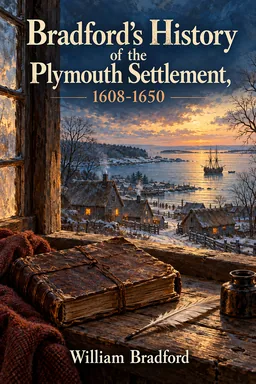
Bradford’s History of the Plymouth Settlement, 1608-1650
Bradford's own history of the Pilgrims, rendered into modern English in 1909, so it reads easily. The manuscript was lost for decades and turned up in the Bishop of London's library in 1855.
Samoset, Squanto and Massasoit
In March 1621 a man walked into the settlement and greeted them in English. Bradford was as surprised as anyone:
About the 16th of March a certain Indian came boldly among them, and spoke to them in broken English, which they could well understand, but were astonished at it.
His name was Samoset. He had learned English from fishing crews on the coast of Maine. He soon returned with Squanto (Tisquantum), "a native of this part, who had been in England and could speak English better than himself," and with the great sachem of the Wampanoag, Massasoit (Bradford spells it Massasoyt). The two sides made a treaty of mutual defense that held for more than fifty years.
Squanto's own story is extraordinary. Bradford tells it in a few lines:
He was carried away with others by one Hunt, a captain of a ship, who intended to sell them for slaves in Spain; but he got away for England, and was received by a merchant in London, and employed in Newfoundland and other parts.
When he finally came home, his village was gone. Bradford notes he "had been one of the few survivors of the plague hereabouts," an epidemic that had swept the coast a few years before the Mayflower came. He stayed with the English as interpreter: "He showed them how to plant their corn, where to take fish and other commodities, and guided them to unknown places, and never left them till he died."
The harvest of 1621
Here is Bradford's description of that autumn, the closest thing in his history to the first Thanksgiving:
They began now to gather in the small harvest they had, and to prepare their houses for the winter, being well recovered in health and strength, and plentifully provisioned.
He goes on to list the food: cod and bass, "every family having their portion," wild fowl arriving with the winter, and then the line every Thanksgiving trivia quiz is after:
As well as wild fowl, they got abundance of wild turkeys, besides venison, etc.
So yes, there were turkeys in Plymouth that autumn. Whether one was on the table at the feast nobody can say for sure. The only eyewitness account of the celebration itself is a short letter by Edward Winslow, printed in London in 1622. He says the governor sent four men out fowling, and that Massasoit arrived with about ninety men, who stayed three days, feasting with the colonists and bringing five deer. Fowl and venison are certain. Turkey is likely. Pumpkin pie, cranberry sauce and mashed potatoes are not: the settlers had no ovens for pies and no sugar to spare.
Massasoit at the table: a 1623 eyewitness
Bradford never described the 1621 meal in detail, and he was too modest to describe his own wedding in 1623. Luckily a visitor did. Captain Emmanuel Altham, who sailed into Plymouth that year, wrote home to his brother about the feast, with Massasoit as guest of honor:
Upon the occasion of the Governor's marriage, since I came, Massasoit was sent for to the wedding, where came with him his wife, the queen, although he hath five wives. With him came four other kings and about six score men with their bows and arrows.
The English fired their muskets in salute, the guests' bows were stored in the governor's house, and Massasoit "brought the Governor three or four bucks and a turkey." Then, Altham says, "we had very good pastime in seeing them dance, which is in such manner, with such a noise that you would wonder." It is the nearest thing we have to a picture of the first Thanksgivings, and it was written by a man who was in the room.
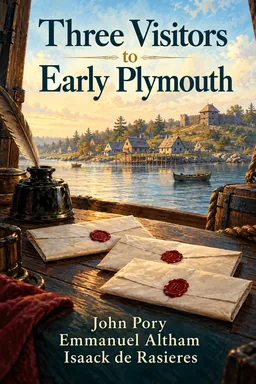
Three Visitors to Early Plymouth
John Pory, Emmanuel Altham and Isaack de Rasieres
Letters from three men who visited Plymouth in the 1620s, including Altham's account of Bradford's wedding feast.
How a harvest feast became a national holiday
The Pilgrims did not call the 1621 meal a "thanksgiving." To them a thanksgiving was a solemn day of prayer, often a fast, declared after a particular blessing. The feast was a harvest celebration of the kind every English village knew.
The holiday we keep came much later. The magazine editor Sarah Josepha Hale campaigned for a national Thanksgiving for seventeen years, and in 1863, in the middle of the Civil War, Abraham Lincoln proclaimed one for the last Thursday of November. Only then did Plymouth's feast become "the first Thanksgiving" in the national story.
Read it yourself
Bradford's history is one of the founding books of America and one of the most honest. He records the dying, the quarrels, the debts and the hard dealings as well as the providences. It takes an evening to read the chapters on the first two years.


Questions people ask
- Did the Pilgrims eat turkey at the first Thanksgiving?
- Probably. William Bradford says that in the autumn of 1621 the settlers "got abundance of wild turkeys, besides venison." The only eyewitness account of the feast itself, by Edward Winslow, mentions fowl and five deer brought by Massasoit's men.
- Who was Squanto?
- Squanto (Tisquantum) was a Patuxet man who had been kidnapped by an English captain to be sold as a slave in Spain, escaped to England, and came home to find his people dead of an epidemic. He became the Pilgrims' interpreter and taught them how to plant corn and where to fish.
- How long did the first Thanksgiving last?
- About three days, according to Edward Winslow's letter. Massasoit came with roughly ninety men, and the two groups feasted and entertained one another.
- When did Thanksgiving become a national holiday?
- In 1863, when Abraham Lincoln proclaimed a national day of thanksgiving for the last Thursday of November, after a long campaign by the editor Sarah Josepha Hale.
- Where can I read William Bradford's Of Plymouth Plantation for free?
- Here, in Harold Paget's 1909 modern-English version, Bradford's History of the Plymouth Settlement. It is free to read online and in the Lost Library app.
Every book in this post
Free to read online, download, or send to your Kindle.
Bradford’s History of the Plymouth Settlement, 1608-1650
Three Visitors to Early Plymouth
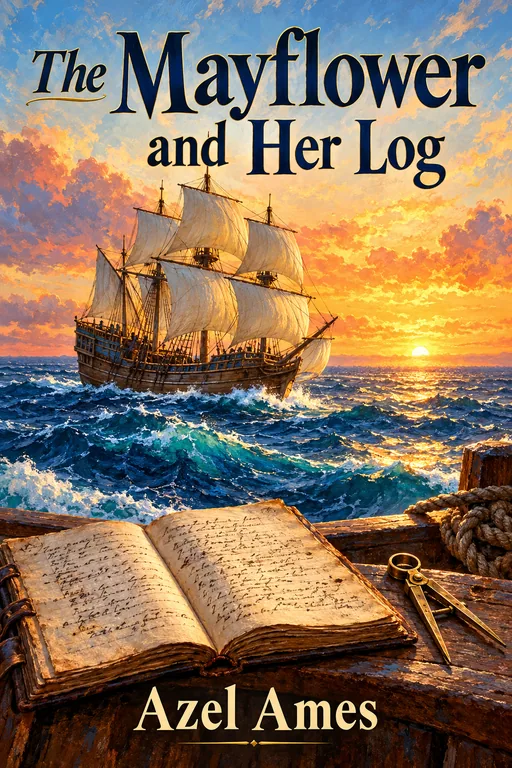
The Mayflower and Her Log
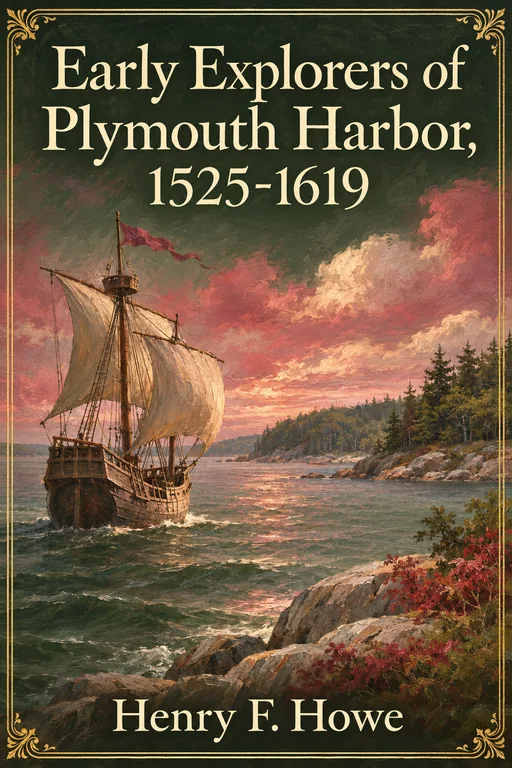
Early Explorers of Plymouth Harbor, 1525-1619
The Children’s Book of Thanksgiving Stories
Cover of The Children’s Book of Thanksgiving StoriesThe Children’s Book of Thanksgiving Stories
Anonymous
Keep reading
Sacred texts
The real story of Hanukkah, from the Books of Maccabees
Why eight days? Is the miracle of the oil in the Bible? Who were the Maccabees? The story of Hanukkah as the ancient books tell it, with the verses that set the festival.
Classic literature
A Christmas Carol explained: the story, the three spirits and what Dickens meant
What A Christmas Carol is really about: Scrooge, Marley's chain, the three spirits, Ignorance and Want, and why Dickens wrote it in six weeks in 1843. With the best lines, word for word.
Reading guides
EPUB vs PDF: which ebook format should you use?
EPUB or PDF? What each format is for, which one works on Kindle, Kobo, iPhone and Android, what happened to MOBI, and how to turn a PDF into an EPUB for free.