

On YouTube and TikTok, the story goes like this: half a million years ago, giant beings called the Anunnaki came to Earth from a hidden planet called Nibiru. They needed gold, so they genetically engineered humans to mine it for them, and the Sumerian clay tablets record the whole thing.
That story comes almost entirely from one man, Zecharia Sitchin, whose book The 12th Planet appeared in 1976. Scholars who read cuneiform have rejected his readings ever since. But you do not have to take anyone's word for it. The tablets were translated by British Museum scholars more than a century ago, and those translations are free. Here is what they say.
Who the Anunnaki were
In Sumerian and Babylonian religion, the Anunnaki are a group of gods: the great gods of heaven, earth and the underworld, often said to be the children of An, the sky god. Later texts pair them with a second group, the Igigi. The Assyriologist E. A. Wallis Budge summed up how the Babylonians saw them:
Thus the Annunaki and the Igigi, who are bodies of deified spirits, were identified with the stars of the northern and southern heaven, respectively.
In the Babylonian creation epic they are an assembly. They gather "at their posts," they sing hymns, and they build the god Marduk a temple:
The Anunnaki themselves made the bricks, and they built the great temple of E-Sagila at Babylon.
The creation epic: Enuma Elish
The Enuma Elish, named after its first words, "When in the height," is the Babylonian creation story, written on seven tablets. It tells how the young god Marduk defeats Tiamat, the monstrous ocean, splits her body in two to make heaven and earth, and becomes king of the gods.
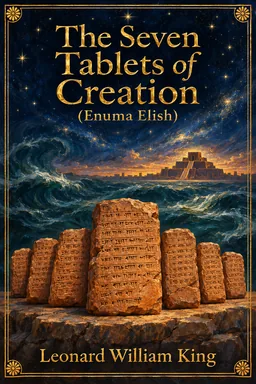
The Seven Tablets of Creation (Enuma Elish)
L. W. King · 1902
L. W. King's 1902 edition of the Enuma Elish, the full Babylonian creation epic, from the British Museum tablets.
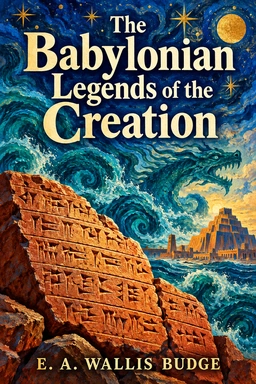
The Babylonian Legends of the Creation
E. A. Wallis Budge · 1875
Budge's short, readable British Museum guide to the creation legends. The best place to start.
Yes, the gods made humans to work
Here is the part the Anunnaki videos get partly right. In the Babylonian story, humans really are created to do the gods' work. The gods complain that they have no one to serve them, and Marduk has an idea:
Marduk devised another "cunning plan," and announced his intention of creating man out of "blood and bone."
The god Kingu, who led Tiamat's army, is found guilty and executed. Then: "From Kingu's blood Ea fashioned mankind for the service of the gods."
So: a divine council, a sacrifice, humans made to serve. It is a powerful, ancient myth, and it shaped the Bible's world (scholars have compared it with Genesis for 150 years). What it is not is a laboratory. There is no gold mine, no spaceship, and no genetic engineering in the text. The "service of the gods" was keeping temples and making offerings.
And Nibiru?
Nibiru is a real Babylonian word. In the Enuma Elish, it is one of Marduk's fifty names:
His name shall be 'Nibiru' the seizer of the middle.
And on the Fifth Tablet, where Marduk organizes the sky and the calendar, Nibiru is a station in the heavens. Budge's translation identifies it plainly:
He founded the Station of Nibir (Jupiter) to settle their boundaries.
In other words, the Babylonian astronomers' Nibiru was a point in the sky associated with Marduk, most often identified with the planet Jupiter. It was not a hidden twelfth planet on a 3,600-year orbit. That idea is Sitchin's.
The Sumerian flood
The tablets also tell a flood story centuries older than Noah's, which Stephen Langdon published in 1915 as The Sumerian Epic of Paradise, the Flood and the Fall of Man. And the Epic of Gilgamesh, the world's oldest great story, has its own flood hero, Utnapishtim, who builds a boat, saves animals and sends out birds to find dry land.
- The Epic of Gilgamish
- An Old Babylonian Version of the Gilgamesh Epic
- The Sumerian Epic of Paradise, the Flood and the Fall of Man
- The Babylonian Story of the Deluge as Told by Assyrian Tablets from Nineveh
- A History of Sumer and Akkad


Why read the originals
The real tablets are stranger and more beautiful than the alien version: a war among gods, a monster split in half to make the sky, humans shaped from a rebel's blood. You can read them yourself, free. For more on giants and fallen angels, see the Nephilim in the ancient texts, and for Plato's lost island, Atlantis in Plato's own words.
Questions people ask
- Who were the Anunnaki?
- In Sumerian and Babylonian religion, the Anunnaki were a group of gods, the great gods of heaven, earth and the underworld. The Babylonians also identified them with stars.
- Did the Anunnaki create humans?
- In the Babylonian creation epic, the Enuma Elish, the god Marduk plans the creation of man, and the god Ea fashions mankind from the blood of the executed rebel god Kingu, "for the service of the gods." The texts say nothing about gold mining or genetic engineering.
- Is Nibiru a planet?
- In the Babylonian texts, Nibiru is one of the god Marduk's names and a station in the sky, usually identified with Jupiter. The idea of a hidden planet Nibiru comes from Zecharia Sitchin's 1976 book, not from the tablets.
- Where can I read the Sumerian and Babylonian tablets?
- The British Museum translations by L. W. King and E. A. Wallis Budge are public domain. Start with Budge's Babylonian Legends of the Creation.
Every book in this post
Free to read online, download, or send to your Kindle.
The Seven Tablets of Creation (Enuma Elish)
L. W. King · 1902
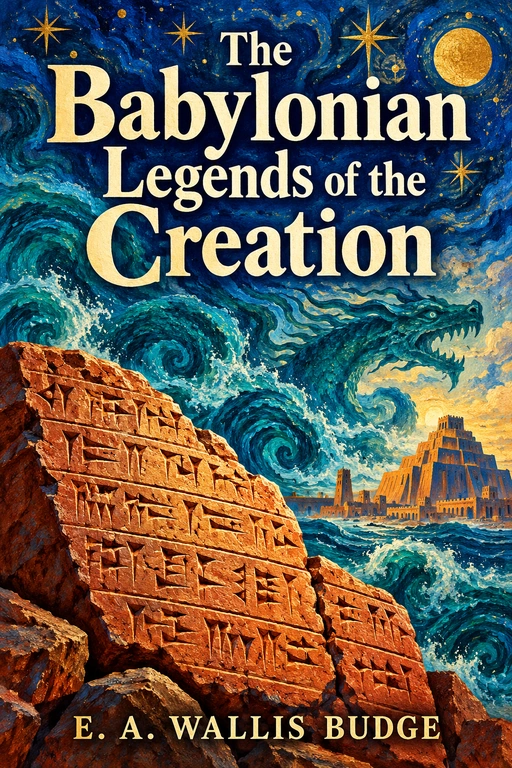
The Babylonian Legends of the Creation
E. A. Wallis Budge · 1875
The Epic of Gilgamish
An Old Babylonian Version of the Gilgamesh Epic
The Sumerian Epic of Paradise, the Flood and the Fall of Man
Stephen Langdon · 1915
The Babylonian Story of the Deluge as Told by Assyrian Tablets from Nineveh
A History of Sumer and Akkad


Keep reading
Lost worlds
Atlantis: what Plato actually said, and the books that kept the search alive
Every Atlantis documentary goes back to two dialogues written 2,400 years ago. Here is the story as Plato told it, the line where it breaks off, and the Victorian books that turned it into a hunt.
Lost books of the Bible
The Nephilim: what the Bible, Enoch and the old legends say about the giants
"There were giants in the earth in those days." Genesis gives the Nephilim two verses. Enoch, Jubilees and Jewish legend tell the rest, down to a giant who rode out the Flood on the ark's roof.
Lost worlds
Agartha and the hollow earth: the old books behind the legend
A smoky inner sun, a race of giants, a power called Vril. Before Agartha was a meme it was a shelf of strange Victorian books. Here they are, and the truth about Admiral Byrd's 'diary.'