
Netflix documentaries, Joe Rogan episodes, sonar maps of the Atlantic floor: the hunt for Atlantis has never been bigger. And every single version of it, however modern, rests on two short texts written in Athens around 360 BC by Plato. Most people who argue about Atlantis have never read them. They take about an hour.
Here is what they say.
The story as Plato tells it
It begins in the Timaeus, as a story within a story within a story. Critias tells Socrates a tale he heard as a boy from his grandfather, who heard it from the great Athenian lawmaker Solon, who heard it from priests in the Egyptian city of Sais. The priests begin by putting Solon in his place:
O Solon, Solon, you Hellenes are never anything but children, and there is not an old man among you.
Their temple records, they say, go back thousands of years further than Greek memory, because Egypt has been spared the floods and fires that periodically wipe out other peoples. And they remember something the Greeks have forgotten: nine thousand years earlier, Athens itself had defeated a great empire from the west.
This power came forth out of the Atlantic Ocean, for in those days the Atlantic was navigable; and there was an island situated in front of the straits which are by you called the Pillars of Heracles; the island was larger than Libya and Asia put together.
Then came disaster, for winners and losers alike:
But afterwards there occurred violent earthquakes and floods; and in a single day and night of misfortune all your warlike men in a body sank into the earth, and the island of Atlantis in like manner disappeared in the depths of the sea.
Plato · 359 BC
Where the Atlantis story starts, inside Plato's great dialogue on how the cosmos was made.
The city in the Critias
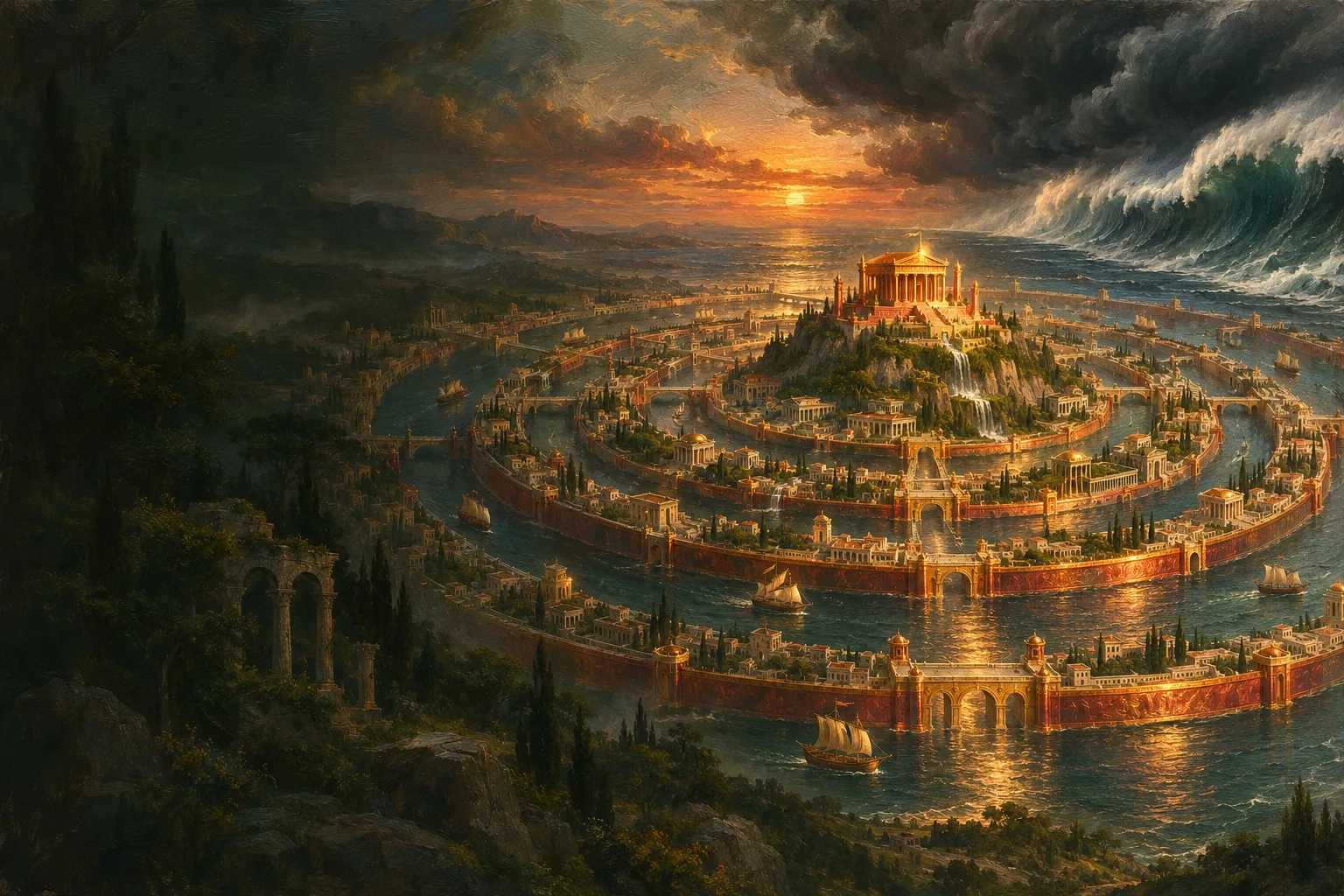
In the second dialogue, the Critias, Plato gives the details that every illustration of Atlantis still follows. The god Poseidon fell in love with a mortal woman, Cleito, and made her home on a hill ringed by alternating circles of sea and land, "zones" of water and earth. Their ten sons became the first kings, the eldest named Atlas, which is where the island and the ocean get their names.
The kings bridged the rings and built canals, docks and a royal palace at the center. The walls were coated with brass and tin, and the citadel wall "flashed with the red light of orichalcum," a precious metal Plato says was mined only there. The laws of Poseidon were inscribed on a column of orichalcum in his temple, where the kings met every fifth and sixth year to judge one another, after hunting a bull.
But over generations the divine part in them faded. They grew greedy and proud, and Zeus gathered the gods to decide their punishment:
And when he had called them together, he spake as follows—
And there the text ends, in the middle of a sentence. Plato never finished it.
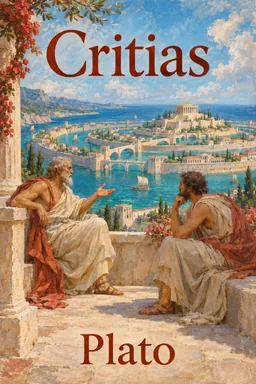
The unfinished dialogue that describes Atlantis itself. Short, vivid, and stopped mid-sentence.
Was Atlantis real?
Most classical scholars think Plato invented Atlantis as a philosophical parable: a proud, rich, naval empire (rather like the Athens of his own day) brought down by its own excess, set against an idealized early Athens. Even his student Aristotle seems to have treated it as fiction. Others have looked for a historical memory behind it, most often the eruption of Thera (Santorini) that devastated Minoan Crete in the Bronze Age.
The modern believers point to something else: the end of the last Ice Age, around 12,000 years ago, when sea levels rose sharply. Plato's "nine thousand years before Solon" lands surprisingly close to that date, and that coincidence powers a great deal of today's Atlantis interest.
The books that turned a parable into a hunt
Ignatius Donnelly, a Minnesota congressman, published Atlantis: The Antediluvian World in 1882 and made it a sensation. He argued that Atlantis was real, the cradle of all civilization, the Garden of Eden of every myth, and that its memory survived in flood legends worldwide. A year later, in Ragnarok, he argued that a comet had struck the earth in the distant past, a startling forerunner of the comet-impact theories behind today's lost-civilization documentaries.
Donnelly's 1882 book, the founding text of the modern Atlantis obsession.
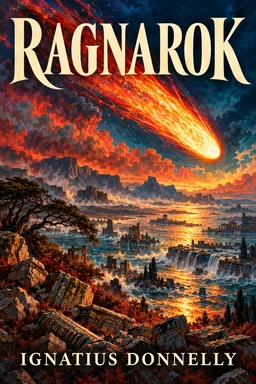
His sequel: fire from the sky and a cosmic catastrophe, 140 years early.
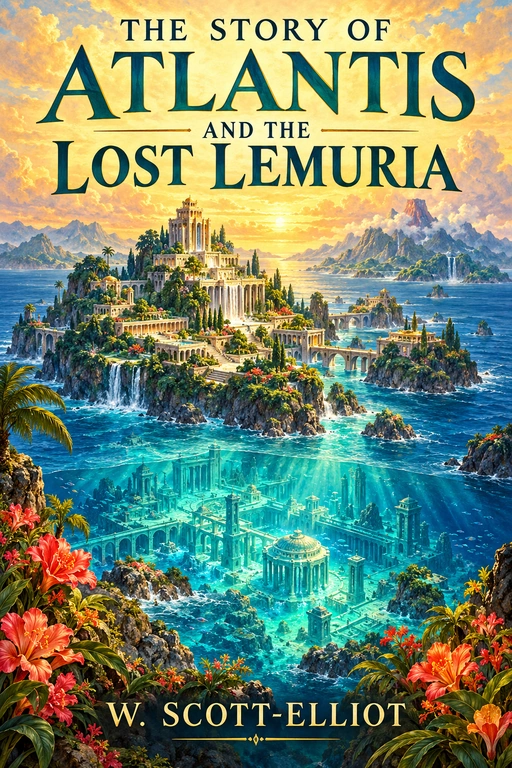
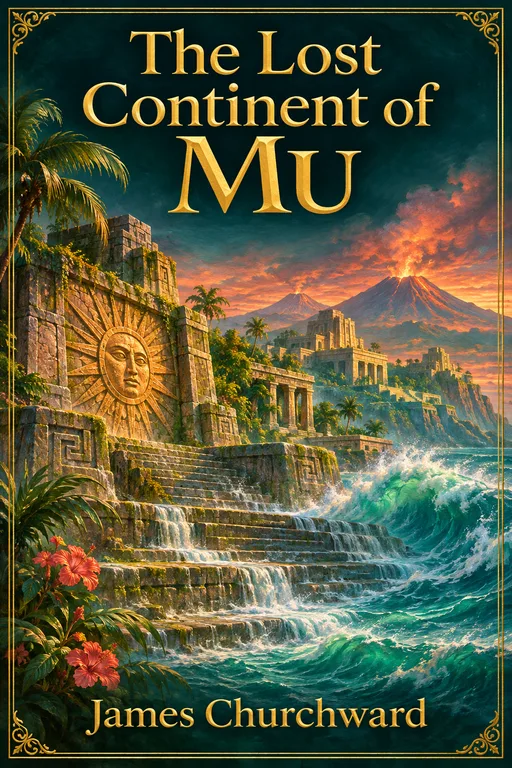
Then came the occultists. The Theosophist W. Scott-Elliot claimed to describe Atlantis by clairvoyance, airships and all. And James Churchward moved the lost continent to the Pacific and called it Mu.
- The Story of Atlantis and the Lost Lemuria
- The Lost Continent of Mu
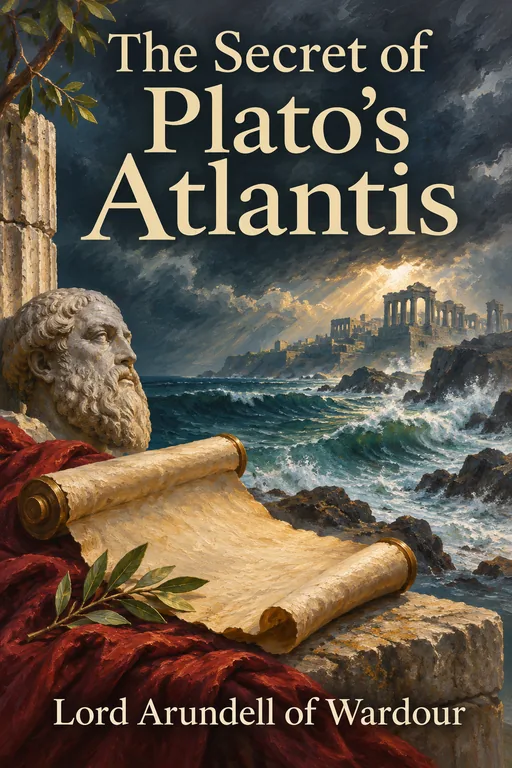
- The Secret of Plato's Atlantis
- New Atlantis
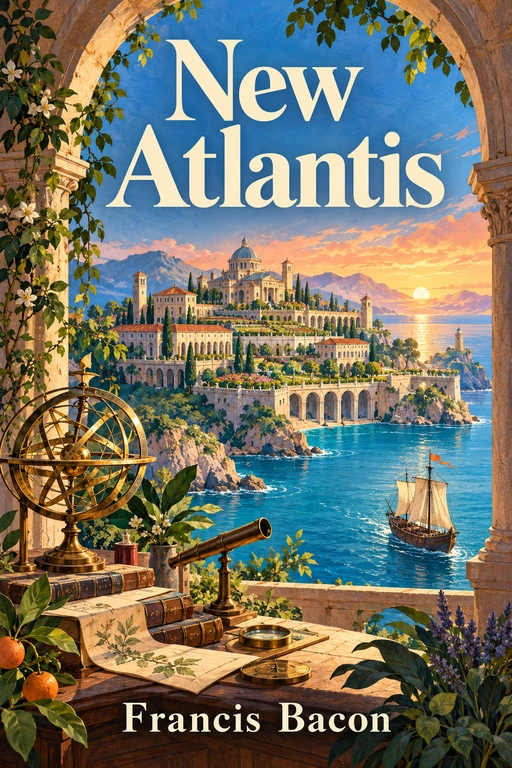


Not everyone was convinced, even then. Lord Arundell's short reply, The Secret of Plato's Atlantis, weighs Donnelly against the evidence. And Francis Bacon's New Atlantis borrowed the name for a utopia of science.
Our reading path Atlantis, from Plato to the Pacific puts them in order, and our post on Agartha and the hollow earth covers the lost worlds underneath.
Questions people ask
- Where did the story of Atlantis come from?
- From two dialogues by Plato, the Timaeus and the Critias, written around 360 BC. Plato says the story came from Egyptian priests at Sais, through the Athenian lawmaker Solon.
- Where was Atlantis, according to Plato?
- In the Atlantic Ocean, "in front of" the Pillars of Heracles (the Strait of Gibraltar), on an island "larger than Libya and Asia put together."
- How did Atlantis sink?
- Plato says that after violent earthquakes and floods, "in a single day and night of misfortune," the island "disappeared in the depths of the sea."
- Was Atlantis real?
- Most scholars think Plato invented it as a moral parable. Others connect it to the eruption of Thera or the rising seas at the end of the Ice Age. You can read Plato's own account free and decide.
Every book in this post
Free to read online, download, or send to your Kindle.


Keep reading
Lost worlds
Agartha and the hollow earth: the old books behind the legend
A smoky inner sun, a race of giants, a power called Vril. Before Agartha was a meme it was a shelf of strange Victorian books. Here they are, and the truth about Admiral Byrd's 'diary.'
Lost worlds
The Anunnaki: what the ancient tablets actually say (and what they don't)
Gold-mining aliens from the planet Nibiru? Here is what the Babylonian and Sumerian texts really say about the Anunnaki, the creation of humans from a god's blood, and Nibiru, in the old translations.
Hidden wisdom
The Secret Teachings of All Ages is now free: a reader's guide to Manly P. Hall
A 27-year-old in Los Angeles wrote the century's great encyclopedia of hidden wisdom, and in 2024 it entered the public domain. What's inside, where to start, and the full book, free.