

The Tao Te Ching is about 5,000 Chinese characters long, short enough to read in an evening. It is traditionally credited to Lao Tzu (Laozi), an archivist said to have lived in the sixth century BC, and it is one of the most translated books in the world. Its 81 short chapters are behind a surprising amount of modern life, from "go with the flow" and "wu wei" (effortless action) to the soft, patient strength of Bruce Lee's "be water."
Every famous English line is a translation, and they vary enormously. Here are the best-known sayings in the classic version by James Legge, the Scottish missionary who became Oxford's first professor of Chinese, published in 1891. Legge puts the words he has to add for sense in brackets, which looks fussy but shows you exactly how compressed the original is.
Laozi · c. 550 BC
Legge's 1891 translation with his notes, beautifully typeset. Free to read.
The Tao that can be named
The book opens with its most famous line, a warning that everything after it is only a pointer:
The Tao that can be trodden is not the enduring and unchanging Tao.
Most modern versions say "The Tao that can be told" or "spoken." Legge chose "trodden" because tao literally means a road or way, and the same word also means "to say."
A journey of a thousand miles
The tree which fills the arms grew from the tiniest sprout; the tower of nine storeys rose from a (small) heap of earth; the journey of a thousand li commenced with a single step.
A li is a Chinese unit of distance, about a third of a mile, so the original journey is shorter than the poster version. The point is the same: great things are made of small ones.
Be like water
The highest excellence is like (that of) water. The excellence of water appears in its benefiting all things, and in its occupying, without striving (to the contrary), the low place which all men dislike.
The softest thing in the world dashes against and overcomes the hardest.
Later the book says it plainly: "Everyone in the world knows that the soft overcomes the hard, and the weak the strong, but no one is able to carry it out in practice."
Knowing yourself
He who knows other men is discerning; he who knows himself is intelligent. He who overcomes others is strong; he who overcomes himself is mighty.
Contentment
There is no guilt greater than to sanction ambition; no calamity greater than to be discontented with one's lot; no fault greater than the wish to be getting.
The usefulness of emptiness
The thirty spokes unite in the one nave; but it is on the empty space (for the axle), that the use of the wheel depends.
The chapter goes on with clay pots and the doors and windows of a house: the useful part of each is the empty part. It is the idea behind every "less is more."
Silence and words
He who knows (the Tao) does not (care to) speak (about it); he who is (ever ready to) speak about it does not know it.
Without Legge's brackets, this is the famous "Those who know do not speak; those who speak do not know."
Sincere words are not fine; fine words are not sincere.
The best leaders
In the highest antiquity, (the people) did not know that there were (their rulers).
The best rulers, in other words, are barely noticed. The chapter ends with the people saying of their own success, "We are as we are, of ourselves."
Heaven and earth are not kind
One line shocks first-time readers:
Heaven and earth do not act from (the impulse of) any wish to be benevolent; they deal with all things as the dogs of grass are dealt with.
The "dogs of grass" were straw figures used in rituals and thrown away afterwards. Nature is not cruel, Lao Tzu means, but it is impartial.
Going further
Taoism's other great book, the Chuang Tzu, is full of stories and jokes where the Tao Te Ching is all riddles, and Legge translated both.
- The Texts of Taoism, Part 1
- The Texts of Taoism, Part 2
- The Tao Teh King
- Taoist Teachings from the Book of Lieh Tzu
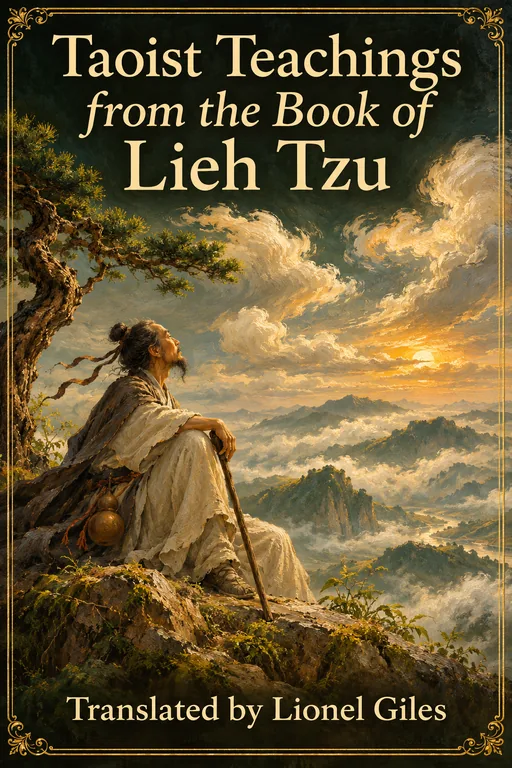


For two Western philosophies that reach many of the same conclusions, see Marcus Aurelius and Seneca in their own words.
Questions people ask
- Did Lao Tzu say "a journey of a thousand miles begins with a single step"?
- Very nearly. Chapter 64 of the Tao Te Ching says, in Legge's translation, "the journey of a thousand li commenced with a single step." A li is about a third of a mile.
- What is the most famous line in the Tao Te Ching?
- The opening: "The Tao that can be trodden is not the enduring and unchanging Tao," usually translated today as "The Tao that can be told is not the eternal Tao."
- What does the Tao Te Ching say about water?
- "The highest excellence is like (that of) water" (chapter 8). Water benefits everything, does not strive, and settles in the low places, yet "the softest thing in the world dashes against and overcomes the hardest."
- Which translation of the Tao Te Ching is free?
- James Legge's 1891 translation is in the public domain and free to read here.
Every book in this post
Free to read online, download, or send to your Kindle.

Keep reading
Eastern wisdom
The Tibetan Book of the Dead explained: the bardo, the Clear Light and the 49 days
Read aloud beside the dying, it guides the mind through 49 days between death and rebirth. Here is what the Bardo Thodol teaches, in the 1927 translation that inspired Jung, Leary and the Beatles.
Eastern wisdom
Kundalini awakening: what the old books say about the serpent, the chakras and the vagus nerve
Long before TikTok, a 1927 Bombay doctor argued that kundalini is the vagus nerve, and a famous occultist warned it could "tear tissues." Here is what the classic sources really teach.
Reading guides
EPUB vs PDF: which ebook format should you use?
EPUB or PDF? What each format is for, which one works on Kindle, Kobo, iPhone and Android, what happened to MOBI, and how to turn a PDF into an EPUB for free.